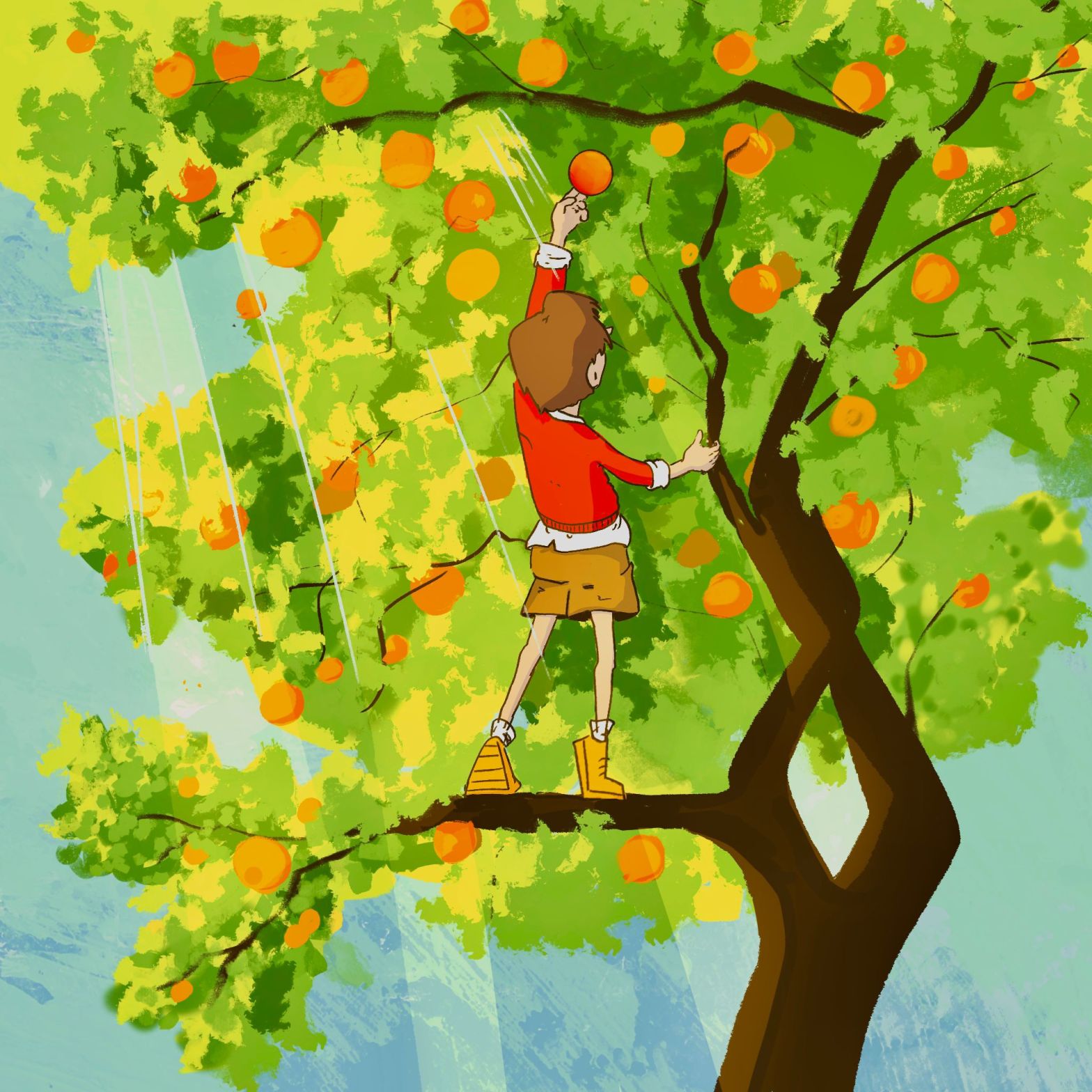
Esiste una strada a Roma, ricolma di aranci. Chissà chi, un bel giorno, forse dal municipio di riferimento della zona, ha deciso di piantare una fila di aranci lungo il marciapiede, per riportare del verde e dell’arancione nel quartiere. Nel corso del tempo, gli alberi sono cresciuti rigogliosamente. Quando sta per arrivare l’inverno, la pianta si colora e sembra quasi soprassedere sullo sporco e bucherellato marciapiede che l’affianca.
Vicino alla schiera di aranci, c’è una scuola elementare. È la scuola di Vale e Ale, loro preferiscono essere chiamati per soprannomi. Vale e Ale si sono conosciuti il primo giorno di scuola di quest’anno, all’inizio della quarta elementare. La loro amicizia è salda perché perfettamente equilibrata: Vale è una chiacchierona, racconta a voce alta tutto anche quello che le passa per la testa; Ale rimane quasi sempre muto. Gli insegnanti parlano di mutismo selettivo, ma non riuscendo a parlarne con i genitori, che puntualmente non si presentano ai colloqui, non sanno a chi raccontare la loro diagnosi. Vale è sempre raggiante, stimolata da genitori che le fanno fare attività di canto, ginnastica artistica e pianoforte tutti i pomeriggi; Ale, invece, potrebbe giocare per tutto il resto del suo tempo libero solo con una piccola macchinina rossa, che ha trovato nell’ultimo ovetto Kinder regalatogli dalla sua compagna di scuola.
I genitori di Ale lavorano tutto il giorno, senza interruzioni. Per questo motivo, la babysitter che guarda Vale passa a prendere anche Ale, quando escono da scuola, e lo riaccompagna a casa. Ogni volta, durante il tragitto, la babysitter e i due bambini costeggiano gli aranci. Vale e Ale si divertono a schivare le arance già cadute sul marciapiede e lasciate marcire lì. Per la prima volta da quando si sono conosciuti, Ale si rivolge alla babysitter e con un italiano incerto le chiede: “Di chi sono questi alberi?” La ragazza risponde che sono di tutti. Ale sembra entusiasta della risposta.
Il giorno dopo, mentre si dirige verso scuola, sempre accompagnato dalla babysitter di Vale, chiede se può prendere un’arancia dall’albero, per la merenda. Gli viene risposto di sì. Durante la ricreazione, l’arancia viene utilizzata come ostacolo che la sua macchinina deve superare. Ci gioca per oltre dieci minuti e solo negli ultimi secondi la sbuccia e se la mangia. Buonissima.
Inizia così un nuovo rituale: ogni giorno, Ale tiene da parte la piccola merendina che la mamma gli aveva preparato, preferendo catturare un’arancia dagli alberi della via per andare a scuola. Così, giorno per giorno, la sfida si fa sempre più difficile: bisogna andare sempre più in alto per accaparrarsi il premio. Anche Anna, la babysitter, si diverte a questa sfida quotidiana e non fa mai mancare il suo aiuto per raccogliere l’arancia che Ale indica con la manina.
Si stavano divertendo come matti, perché Anna era scivolata su un’arancia lasciata marcire sul marciapiede che non aveva visto, quando la proprietaria del negozio di fronte all’arancio preso di mira quel giorno non è uscita dalla porta, urlando: “ Una vergogna! Vi dovreste vergognare: cosa insegnate ai bambini? Insegnate a rubare? Che rubare è giusto?” Anna, incredula per l’attacco ricevuto, ribatte prontamente: “Non stiamo facendo nulla di male signora.” “Ah no? State rovinando il paesaggio. Queste arance non si devono mangiare, servono come allestimento. E poi, con tutto il rispetto, ho visto crescere questa bambina, Valentina, e so perfettamente di chi è figlia, di una famiglia che certo non deve rubare per campare…” Anna, a questo punto, stringe i due bambini quasi per proteggerli e senza battere ciglio, risponde: “Sapete cosa le dico? Le dico che avete appena fatto una bella figuraccia. Questo è un bene pubblico, quindi è per tutti! Le arance, cara signora, almeno che lei non abbia il dono della pittura e sappia dipingerle, non servono come allestimento ma per mangiarle, per dare vita. Infatti quelle dipinte sa come si chiamano? Natura morta, mica viva. Poi, visto che lei sprizza di lezioni di civiltà questa mattina, mi può dire perché davanti al suo negozio ci sia sempre questo disastro per terra? Se vuole glielo spiego io. Perché le sue cara arance, dal momento che non sono parte di un allestimento ma sono semplicemente dei frutti, non venendo raccolte per essere mangiate, quando cadono creano questa bella distesa marcia proprio davanti al suo negozio. E quindi? Chi sarebbe l’incivile? Noi o lei che lascia che tutto questo bene venga sprecato? Arrivederci.”
Si volta verso i due bambini e ordina loro di prendere due arance da portare a casa. “Prendila anche tu Vale, alla mamma farà piacere.”
Così, dopo la scuola, i due bambini tornano nello stesso palazzo. Vale prende l’ascensore per andare nell’attico dell’ultimo piano insieme alla babysitter; Ale, invece, si ferma al pianoterra, dove sua mamma lavora come portinaia da quando sono arrivati dalla Romania. Al portone le dice di avere un regalo per lei: fa scivolare la sua manina nella tasca e tira fuori una piccola arancia.
The orange trees
There is a street in Rome filled with orange trees. Who knows who, one day, perhaps from the local municipality, decided to plant a row of orange trees along the pavement, to bring some green and orange back to the neighbourhood. With time, the trees have grown lushly. When winter is approaching, the plant changes sides and almost seems to overlook the dirty andpockmarked pavement beside it.
Near the orange trees row, there is a primary school. It is Vale and Ale’s school, who prefer to be called by their nicknames. Vale and Ale met on the first day of school this year, at the beginning of the fourth grade. Their friendship is firm because it is perfectly balanced: Vale is very talkative, loudly telling everything that comes to mind; Ale is almost always silent. The teachers talk about selective mutism, but as they are unable to talk about it with their parents, who punctually fail to show up for school meetings, they do not know who to tell about their diagnosis. Vale is always radiant, stimulated by parents who make her do singing, artistic gymnastics and piano every afternoon; Ale, on the other hand, could only play for the rest of his free time with a small red toy car he found in the last Kinder egg given to him by his school friend.
Ale’s parents work all day, without interruption. Therefore, the babysitter who watches over Vale also picks up Ale when they leave school and drives him home. Each time, on the way, the babysitter and the two children walk along the orange trees. Vale and Ale enjoy dodging the oranges that have already fallen on the pavement and been left there to rot. For the first time since they met, Ale turns to the babysitter and in uncertain Italian asks her: “Whose trees are these?”. The girl replies that they belong to everyone. Ale seems to be thrilled by the answer.
The next day, on his way to school, again accompanied by Vale’s babysitter, he asks if he can take an orange from the tree for a snack. He receive a “yes” as an answer. During the school break, the orange is used as an obstacle for his little car to overcome, he plays with it for over ten minutes and only in the last few seconds he peels it and eats it. It is delicious.
Thus begins a new ritual, Ale keeps aside the small snack his mother had prepared for him, to try, every day, to catch an orange from the trees on the way to school. So, day by day, the challenge becomes more and more difficult: you have to go higher and higher to catch the prize. Anna, the babysitter, also enjoys this daily challenge and never fails to help to pick the orange that Ale points to with his little hand.
They were having the time of their lives, because Anna had slipped on an orange left rotting on the pavement that she had not seen, when the owner of the shop in front of the orange tree targeted that day walked out of the door, shouting: “Shame on you! You should be ashamed: what do you teach children? Do you teach them to steal? That stealing is right?” Anna, incredulous at the attack she received, promptly answers: “We are not doing anything wrong ma’am”. “Oh no? You are ruining the landscape. These oranges are not meant to be eaten, they serve as staging. Besides, with all due respect, I saw this child, Valentina, grow up and I know perfectly well whose daughter she is, from a family that certainly does not have to steal for a living…”. Anna, at this point, squeezes the two children almost as if to protect them and without batting an eye, replies: “You know what? You have just made a complete fool of yourselves. This is a public asset, so it is for everyone! The oranges, dear lady, unless you have the gift of painting and know how to paint them, are not for display but for eating, for giving life. In fact, the painted ones, do you know how they are called? Still life, not alive. Then, since you are bursting with lessons in civilisation this morning, can you tell me why there is always this mess on the ground in front of your shop? I will explain it to you. Your dear oranges are not part of a setting up but are simply fruits. Thus, when they fall, if they are not picked to be eaten, they create this beautiful rotten mess right in front of your shop. So what? Who would be the uncivilised? The one who lets all this good go to waste or us? Goodbye”. She turns to the two children and orders them to take two oranges home. “You take it too Vale, your mum will be happy”.
After school the two children return to the same building. Vale takes the lift to the top-floor penthouse with her babysitter; Ale, on the other hand, stays on the ground floor, where his mum has been working as a concierge since they arrived from Romania. At the door he tells her he has a present for her: he slips his little hand into his pocket and pulls out a small orange.
 Grandi Storielle 🖌📚