La grande storiella di Momo

“Sembrava mio nonno, sembrava non avessi un padre. Mia madre, i miei compagni di scuola non l’hanno mai vista e scambiavano mio padre per mio nonno. Me la pesavo, perché boh mi dicevano: è arrivato tuo nonno. E poi erano tutti magri, io il solo cicciotello: capisci che sembravo sempre quello uscito male. Eh poi sì, c’è la questione della pelle. Sì, ma quella è roba classica, quasi banale. Non mi piace manco stare tanto a parlare di razzismo. Certo l’ho vissuto, anche da bambino: da piccolo, certe volte, mia mamma doveva portarmi via da certe situazioni, e io non capivo. Solo crescendo ho capito. E crescendo sono arrivato alla consapevolezza di dire: me ne sbatto. 

Chi sei e qual è la tua grande storiella?

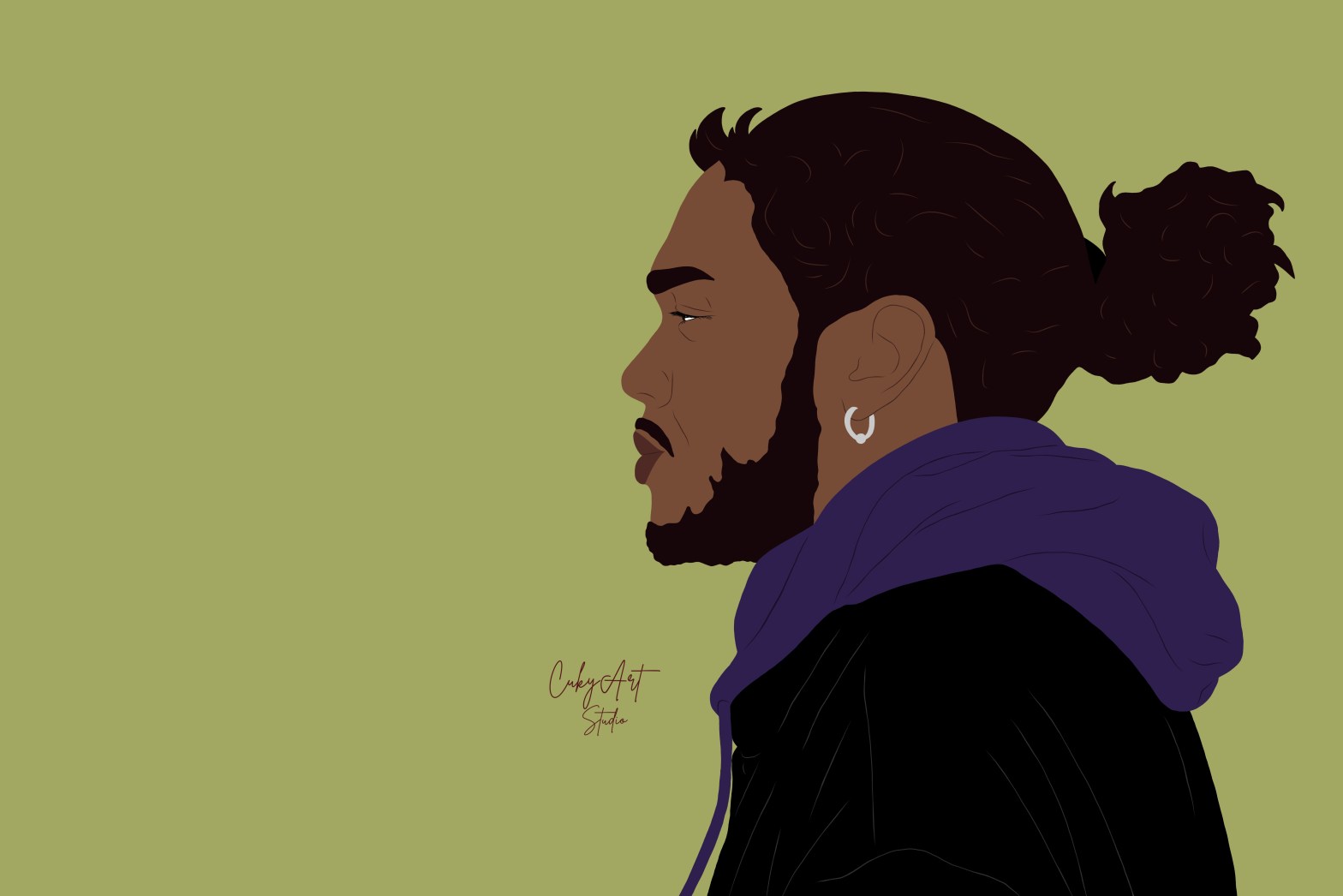
Io sono Momo, ho 21 anni, sono un ragazzo italo somalo. Sono nato a Torino, il 21 febbraio 2002 e la mia grande storiella è semplicemente quella di sentirmi diverso. Nasco da una mamma somala e un papà marocchino. Un anno e mezzo dopo la mia nascita si separano 

e il fattore principale per cui si sono lasciati, è stato il non capirsi tra mio padre e mia madre:  mio padre musulmano mega religioso; mia mamma molto più libera molto più serena, rispettosa della religione ma anche della sua libertà, come uscire di casa per fare le sue cose. Insomma, cose normali ma che mio padre non le concedeva di fare. 

Mia mamma 

Mia mamma arriva in Italia negli anni ‘90. Da quel momento gira per l’Europa, prima di decidere di stabilirsi qui. Arrivava da un paese con una lunga guerra civile. Sinceramente questo era il grave problema: ha fatto veramente fatica ad uscire. Ovviamente non poteva prendere un aereo diretto dalla Somalia e questo sembra una banalità, ma è quello che vediamo e viviamo ogni giorno. Mentre cercava di scappare, le hanno sparato a bruciapelo ad una spalla, le hanno lasciato una ferita importante, che spesso le fa male. Comunque è ruscita a scappare fino in Kenya, per poi raggiungere l’Italia. dopo aver girovagato per circa dieci anni per l’Europa, a Torino ha conosciuto mio padre. 

Da piccolo cresco nel quartiere di San Salvario, dove ho frequentato le elementari e le medie. Mentre dalle superiori sono venuto a vivere in Barriera di Milano, un quartiere periferico di Torino. 

Io mi sono veramente sentito bene qua. Forse mi posso dire di sentirmi a mio agio, anche non sono mai stato troppo giudicato in Barriera di Milano. 

Barriera 

Per descrivere Barriera di Milano, devi pensare a un grande continente. Cioè, secondo me non puoi pensarlo come un quartiere, ma un continente. Perché è grandissimo, è vasto, pieno di persone diverse, di tutte le etnie, e di tutte le tipologie di persone, capito? 

Cioè puoi trovarti dal nigeriano che non sa niente, a quello che ha studiato una vita e magari è un dottore, capito? Cioè puoi trovarti un italiano che ha studiato anche lui per tutta una vita, ma non è arrivato da nessuna parte e puoi trovarti anche l’italiano che magari ha avuto un’eredità e si trova qua, capito? Ci sono mille, mille possibilità. Però la fortuna vuole che tutte queste diversità in questo quartiere riescono ad amalgamarsi perfettamente: io quando sento brutte storie, che provengono da qui, mi sembra sempre impossibile. Sì, certo ci sono, però non sono così tanta alla fin fine: secondo me vengono pesate di più quelle brutte che quelle belle. A me questo, questo quartiere, piace e merita molto di più. 

Hai raccontato che il punto centrale della grande storiella è quella di non sentirti incompreso e di sentirti diverso: questo modo d’essere, qui in Barriera di Milano, si affievolisce, cambia? 

Come ti dicevo, prima abitavo in San Salvario, che è comunque un quartiere multietnico, dove però le vivi le diversità. Io lì sapevo di essere visto prima di tutto come un marocchino. Che poi a pensarci bene, io mi sento molto più somalo che marocchino, nonostante mi piaccia anche il mondo marocchino. A dire la verità a me piace tutto il mondo, però capiamoci la sfortuna vuole che io cresco staccato da quella figura paterna che non ha mai voluto essere un padre, ok? Crescendo lo vedevo una volta al mese, ma va bene così. Il fattore di non avere un padre era pesante per me. Quando mi chiedevano chi fosse mio padre, da piccolo, per me era un disagio, era sentirmi diverso. Anche perché poi, un papà che mi ha voluto bene e mi ha cresciuto è arrivato. Un uomo italiano, nato nel 1941. Ma anche lì c’era del disagio. Iniziano a girare le classiche storie: “Ah ma lei sta con lui solo per i soldi” e tutte queste cose così, capito?

Lui era nato in piena Seconda Guerra Mondiale, in un paesino in Veneto, in una famiglia povera, ed era venuto in Piemonte a cercare il lavoro. Mia mamma l’ha conosciuta al mercato, in corso Palestro. Lui aveva una bancarella. Ed è stato lì  per circa quindici  anni, fino al 2005, alla nascita di mio fratello, cioè il figlio del mio papà Guerrino e di mia madre. 

E le voci giravano e sapevamo di non essere ben visti neanche dalla famiglia di Guerrino, per esempio da sua figlia e dagli altri parenti. E quindi era sempre tutto pesante, pensante farlo vivere ad un bambino, perché inconsciamente, intanto, io elaboravo tutto.

Arrivo in Barriera all’inizio delle superiori, quando vado all’istituto professionale Bodoni Paravia dove studiavo grafica pubblicitaria: volevo entrare nell’ambiente della moda. Mi piace stilizzare al computer, mi piaceva vedere una mia idea che si realizzava. E faccio questa scuola per tre anni. E sfortuna vuole che arrivino gli anni del Covid. 

Pandemia, una storiella assurda e la dispersione 

Intendiamoci, io volevo andarci a scuola. Io volevo finirla, ma sono arrivato fino alla terza superiore e poi ho mollato. Ho mollato per dimostrare che potevo fare tutto da solo. Tra la seconda e la terza, durante l’estate, ho cominciato a lavorare.

Già prima avevo una bancarella di gioielli indiani al Baloon. Infatti questo anello ce l’ho da quando ho iniziato a lavoricchiare: i miei primi 20 euro li ho spesi per comprarmi questo anello. Ci tengo tantissimo. Lo metto tutti i giorni: mi fa sentire me stesso. Cioè mi lega, capito?

Quell’estate non volevo più fare il mercato e così ho iniziato a fare il porta a porta, pe runa compagnia. Ora, immagina: Porta a porta significa che io vengo da te. E spesso non mi aprivano nemmeno la porta. Mi ricorderò per sempre un episodio a San Mauro, qui vicino.

Entro in casa di questa signora anziana che aveva la badante. Convinco la signora a fare il contratto. Ad un certo punto arriva la chiamata al telefono di casa, la signora mi dice di rispondere: al telefono c’era la figlia che mi diceva che me ne dovevo andare. Evidentemente la badante l’aveva chiamata: “Tu te ne devi andare, chi sei? Sei un ladro te ne devi andare!” Boh, mi è salito un attimo un po’ di panico, però ho detto vabbè, amen. Cioè va bene, me ne vado subito, stia tranquilla. Non si preoccupi.

Metto giù il telefono, spiego alla signora che sua figlia fosse contraria e me ne vado. Chiamo allora il mio capo e gli racconto quello che era appena successo. Lui mi fa : “No, no, sei un coglione. Tu dovevi rimanere dove devi stare lì!” Io gli rispondo: “Ma se rimanevo lì e arrivava la polizia trovavano un ragazzo di colore, ancora minorenne, all’interno di un appartamento che sta facendo firmare il contratto a una signora! Ma ti rendi conto che casino?” Se non fossi stato di colore, l’avrei magari pure chiuso quel contratto.

Intanto è arrivato il 2020 e mio padre inizia a stare male. Era anziano e inizia ad avere problemi a livello polmonare. Ha avuto una brutta infezione ed è stato tipo ricoverato per un mese in ospedale pieno marzo 2020. In ospedale se lo prendono e non ci dicono più niente. Non lo abbiamo visto per un mese. L’avevano anche spostato in vari posti. Non lo si poteva andare a trovare, perché non ero considerato parente stretto. In pratica, perché non avevo il suo stesso cognome. 

E ritornava sempre la stessa storia: io mi sento suo figlio, io sono suo figlio, ma per gli altri no. Non vengo visto tale. Sta roba era proprio sfaso. 

Mio padre esce ed inizia un periodo di malessere continuo. Arriviamo così all’estate del 2021. Era un periodo travagliato, dove io facevo fatica a stargli vicino perché proprio stava male. La scuola voleva che io continuassi a seguire le videolezioni, però io stavo da mio padre, e se c’era bisogno gli davo una mano. Continuavo a dire: “Io vorrei fare lezione, recupererò.”  Loro mi dicevano di no, che dovevo fare delle presenze, che avevo già troppe ore di assenza. Mi contattavano anche i miei compagni di classe, mi chiedevano di provarci ancora. Io mi ero stufato di quel mondo della scuola dove ero giudicato in una maniera sbagliata. Io sono stato visto come un fancazzista, uno che non aveva voglia di fare nulla, semplicemente mi applicavo dove mi andava: se non mi interessa un determinato ambito non mi impegno, però se devo farlo lo faccio e amen. Ma io sapevo di essere tacciato come uno scansafatiche, mi dicevano che andavo lì solo per scaldare il banco. Subito queste parole sembravano quasi fortificarmi, e invece dopo un po’ mi ritrovavo completamente abbattuto. E così all’inizio dell’anno scolastico del 2021 ho detto basta, non non posso andare lì e stare male, cioè ogni giorno era un litigio continuo e a me sta roba ha iniziato troppo a pesare. Chiedo a mia mamma di aiutarmi a trovare un lavoro.

Call center 

A diciotto anni, finisco al call center: mi metto lì e lavoro, lavoro, lavoro e lavoro. Non andando più a scuola, il lavoro era il mio unico obiettivo.

Soprattutto avendo un papà così anziano, che vedevo che si spegneva ogni giorno, io lavoravo sempre di più.E l’età è proprio una brutta bestia. Io ho un rapporto con il tempo molto strano: ho molti ricordi falsati, penso di avere ormai sempre vent’anni, non voglio ricordare determinate cose, non mi piacciono i legami con il passato e il tempo lo voglio considerare per me, voglia che sia una roba molto mia, non voglio che sia  una linea, capito? 

Dopo quattro mesi mi danno una promozione. Io guadagnavo 400 euro al mese più provvigioni per ogni contratto o conferma ordini di un e-commerce. Perciò ogni conferma di un ordine consegnato al cliente, per me era un più un tot. Per un periodo arrivavo anche a  1000-1200 euro al mese, che comunque per un ragazzo di 18 anni dici  è buono. 

Quando mi danno la promozione mi spostano al reparto, dove mi occupavo anche del post-service: una volta consegnato il pacco, se non viene ritirato dal cliente, io ti chiamo per fartelo arrivare. Per questo motivo mi devo presentare. Naturalmente io mi chiamo Mohamed, un nome molto comune nella nella comunità araba. Mi hanno obbligato a cambiare il mio nome: mi chiedevano di chiamarmi Leonardo. Giacomo, Francesco, nomi italiani. Cioè a me sta roba, non non mi rispecchia. La roba che mi obbligavano inizia a pesarmi. 

Mio papà

Mio padre intanto peggiorava, e la mia stessa capa, la capa del reparto, mi dice di stare a casa, che mi capiva, che anche lei aveva perso suo padre di recente. Allora mi prendo delle vacanze, vado a staccare un po’ la testa nelle Marche e a Gallipoli. 

Finisce di nuovo in ospedale. Da lì, da quel luglio, non esce più. 

Mi ricordo di quando ci hanno chiamato. Era un mercoledì ed erano le sette di mattina. 

Ero andato a trovarlo tutti i giorni, tranne il giorno prima, quando avevo deciso di tatuarmi una parola che per me è molto importante, in mezzo al petto: le parole love e alone, scritto nella stessa parola. Proprio perché, gira e rigira, il mio amore me lo devo ridare da solo.Il giorno dopo mio padre è venuto a mancare. Arrivo in ospedale dove c’è anche l’ex moglie, i cugini e mia sorellastra, la figlia di Guerrino. 

Quando passa la salma, quando il dottore arriva, si dirige direttamente verso la parte bianca della famiglia. Mentre vedo il medico che sta per andare verso l’ex moglie, mia mamma scatta in avanti e va a baciare mio padre. Non è stato bello. 

Poi ognuno vive il lutto a modo suo.

Io non giudico, tornassi indietro, penso farei come mia madre. Perché quella è stata l’ultima volta in cui l’ho visto. Quello che sono ora è solo grazie a lui. Penso a tutte le volte che mi ha detto: “Ma che cazzo dici, svegliati! Esci da questo tunnel!” Lui voleva che me la vivessi meglio. “Non farti questi pensieri stupidi. Tanto tutti vivimo le stesse cose, viviamo gli stessi sentimenti, tutti viviamo la nostra vita a modo nostro. Cioè tu non devi farti problemi di quello che pensano quegli altri, tanto tu sai cosa sei.” Queste parole continuavo a bombardarmi il cervello. Anche quando ero tornato al call center e non avevo voglia di lavorare, 

Quando viene a mancare mi prendo il mio periodo di lutto obbligatorio, torno a lavorare primi di ottobre. Penso sia stato uno dei periodi più brutti, ma proprio più brutti del mio cervello.  Guardavo ‘sto schermo, con gli occhi semi-chiusi e dicevo basta. Io non voglio più farlo questo, ma intanto continuavo con gli stessi gesti, usavo sempre le stesse frasi, tutte le classiche cazzate che ho imparato a dire. 

Esco dal call center con questa scena penosa di loro che mi dicevano che non avevo voglia di lavorare. Dopo un anno che io lavoro qua dentro, non puoi dirmi che non non ho voglia di lavorare, cioè sono il più giovane qua dentro ho fatto tutto quello che dovevo fare nelle maniere più giuste e corrette del mondo, dove per periodi facevo anche di più. Stacco le cuffie, prendo il mio zaino e me ne vado. Boh, da quel giorno non ho più messo piede dentro quel posto. Tu mi conosci, sai come lavoro, sai quello che ho passato, e mi butti via come carta straccia.  

Bazzico vari lavoretti, da un call center al buttafuori. Dopo un anno dove ho fatto tantissimi lavori, riprovo in un call-center che dava anche una formazione retribuita, pensavo allora che fosse un’azienda  seria. Come metto i piedi dentro, mi tornano in mente i flishback di me a 17 anni, quando facevo i contratti. Comunque ci provo.

Faccio due settimane e capisco proprio che non è il mio. Lì per fortuna conosco Ale, diventiamo amici. colui che fa le foto per questo podcast. 

Siamo al novembre del 2022, e mi arriva la proposta di diventare barista nello stesso locale dove avevo fatto il buttafuori. Ci lavoro tutt’ora e mi sta piacendo tantissimo, tanto da volerci investire anche in un bel progetto: mi piacerebbe fare un corso importante a livello internazionale, poter andare anche all’estero a lavorare. Sto anche riprendendo la mia vecchia passione e sto facendo grafiche personalizzate, per una compagnia di cover di cellulari. Tipo questa cover a specchio, l’ho fatta io. 

Conclusione: ad oggi, come ti senti? 

Allora diciamo ho capito che prima di partire dagli altri devo partire sempre da me stesso. Io non sono perfetto, lo dico subito, cerco sempre di essere molto onesto con me stesso. 

Però sai adesso, arrivo alla fine della giornata e dico : “Ok, mi piace  quello che ho fatto, sono soddisfatto, sono a posto con la mia coscienza.” Sul fatto di venir giudicato, ho capito che devo sbattermene perché tanto il pensiero altrui ci sarà sempre, e questo è vero, ma è anche vero che dipende sempre da quanto peso decido di dargli. Dipende molto da me, capito? 

Naturalmente devo saper dare peso, a tutto, nella giusta maniera. Non prendere le cose sottogamba, però, allo stesso tempo, ho 21 anni, posso godermi ancora molte cose capiamoci, cioè, non devo farmi troppi anche pensieri pesanti, capito?

E questa è la mia grande storiella. Grazie
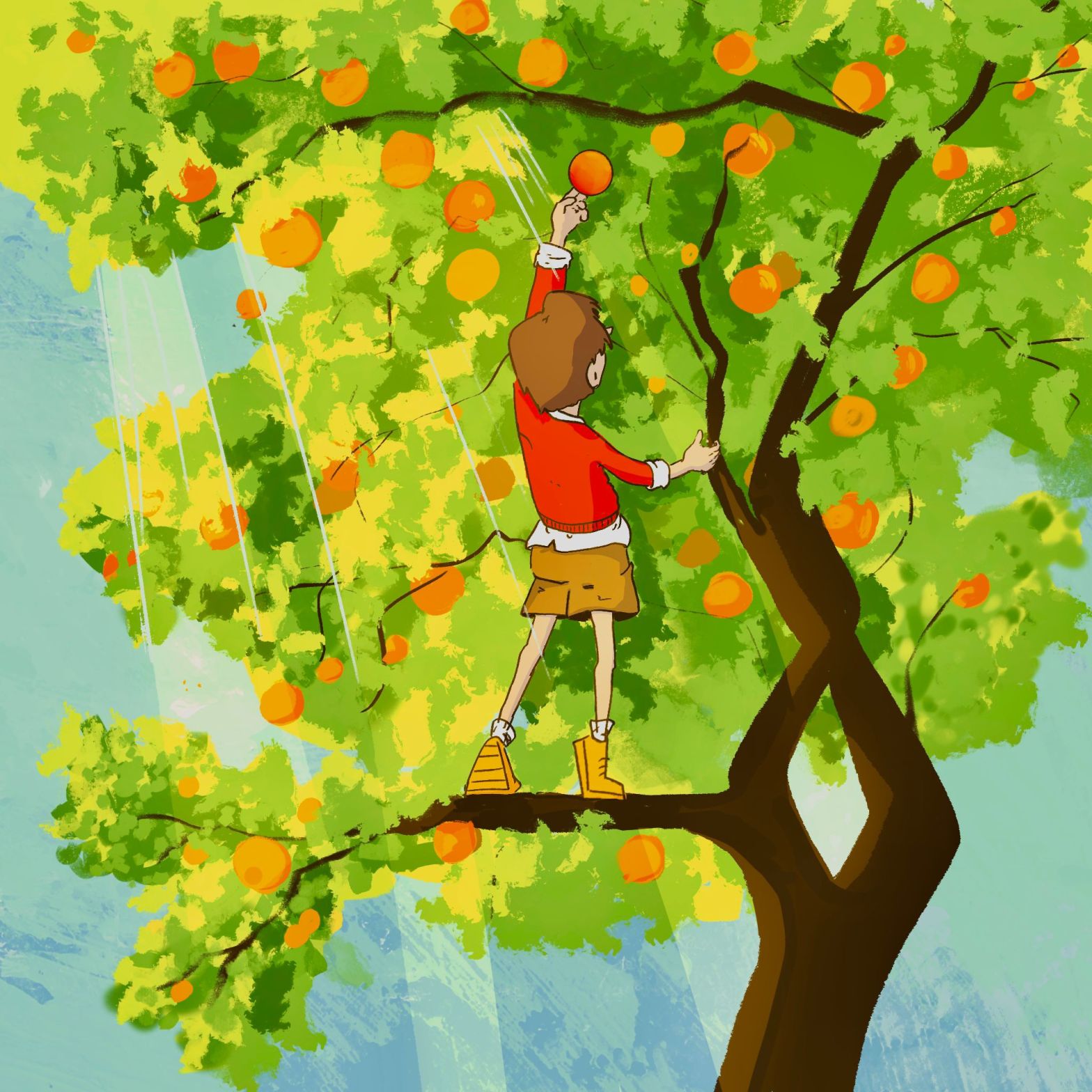
The orange trees

There is a street in Rome filled with orange trees. Who knows who, one day, perhaps from the local municipality, decided to plant a row of orange trees along the pavement, to bring some green and orange back to the neighbourhood. With time, the trees have grown lushly. When winter is approaching, the plant changes sides and almost seems to overlook the dirty andpockmarked pavement beside it.

Near the orange trees row, there is a primary school. It is Vale and Ale’s school, who prefer to be called by their nicknames. Vale and Ale met on the first day of school this year, at the beginning of the fourth grade. Their friendship is firm because it is perfectly balanced: Vale is very talkative, loudly telling everything that comes to mind; Ale is almost always silent. The teachers talk about selective mutism, but as they are unable to talk about it with their parents, who punctually fail to show up for school meetings, they do not know who to tell about their diagnosis. Vale is always radiant, stimulated by parents who make her do singing, artistic gymnastics and piano every afternoon; Ale, on the other hand, could only play for the rest of his free time with a small red toy car he found in the last Kinder egg given to him by his school friend.

Ale’s parents work all day, without interruption. Therefore, the babysitter who watches over Vale also picks up Ale when they leave school and drives him home. Each time, on the way, the babysitter and the two children walk along the orange trees. Vale and Ale enjoy dodging the oranges that have already fallen on the pavement and been left there to rot. For the first time since they met, Ale turns to the babysitter and in uncertain Italian asks her: “Whose trees are these?”. The girl replies that they belong to everyone. Ale seems to be thrilled by the answer. 

The next day, on his way to school, again accompanied by Vale’s babysitter, he asks if he can take an orange from the tree for a snack. He receive a “yes” as an answer. During the school break, the orange is used as an obstacle for his little car to overcome, he plays with it for over ten minutes and only in the last few seconds he peels it and eats it. It is delicious.

Thus begins a new ritual, Ale keeps aside the small snack his mother had prepared for him, to try, every day, to catch an orange from the trees on the way to school. So, day by day, the challenge becomes more and more difficult: you have to go higher and higher to catch the prize. Anna, the babysitter, also enjoys this daily challenge and never fails to help to pick the orange that Ale points to with his little hand.

They were having the time of their lives, because Anna had slipped on an orange left rotting on the pavement that she had not seen, when the owner of the shop in front of the orange tree targeted that day walked out of the door, shouting: “Shame on you! You should be ashamed: what do you teach children? Do you teach them to steal? That stealing is right?” Anna, incredulous at the attack she received, promptly answers: “We are not doing anything wrong ma’am”. “Oh no? You are ruining the landscape. These oranges are not meant to be eaten, they serve as staging. Besides, with all due respect, I saw this child, Valentina, grow up and I know perfectly well whose daughter she is, from a family that certainly does not have to steal for a living…”. Anna, at this point, squeezes the two children almost as if to protect them and without batting an eye, replies: “You know what? You have just made a complete fool of yourselves. This is a public asset, so it is for everyone! The oranges, dear lady, unless you have the gift of painting and know how to paint them, are not for display but for eating, for giving life. In fact, the painted ones, do you know how they are called? Still life, not alive. Then, since you are bursting with lessons in civilisation this morning, can you tell me why there is always this mess on the ground in front of your shop? I will explain it to you. Your dear oranges are not part of a setting up but are simply fruits. Thus, when they fall, if they are not picked to be eaten, they create this beautiful rotten mess right in front of your shop. So what? Who would be the uncivilised? The one who lets all this good go to waste or us? Goodbye”. She turns to the two children and orders them to take two oranges home. “You take it too Vale, your mum will be happy”.

After school the two children return to the same building. Vale takes the lift to the top-floor penthouse with her babysitter; Ale, on the other hand, stays on the ground floor, where his mum has been working as a concierge since they arrived from Romania. At the door he tells her he has a present for her: he slips his little hand into his pocket and pulls out a small orange.

Gli aranci

Esiste una strada a Roma, ricolma di aranci. Chissà chi, un bel giorno, forse dal municipio di riferimento della zona, ha deciso di piantare una fila di aranci lungo il marciapiede, per riportare del verde e dell’arancione nel quartiere. Nel corso del tempo, gli alberi sono cresciuti rigogliosamente. Quando sta per arrivare l’inverno, la pianta si colora e sembra quasi soprassedere sullo sporco e bucherellato marciapiede che l’affianca. 

Vicino alla schiera di aranci, c’è una scuola elementare. È la scuola di Vale e Ale, loro preferiscono essere chiamati per soprannomi. Vale e Ale si sono conosciuti il primo giorno di scuola di quest’anno, all’inizio della quarta elementare. La loro amicizia è salda perché perfettamente equilibrata: Vale è una chiacchierona, racconta a voce alta tutto anche quello che le passa per la testa; Ale rimane quasi sempre muto. Gli insegnanti parlano di mutismo selettivo, ma non riuscendo a parlarne con i genitori, che puntualmente non si presentano ai colloqui, non sanno a chi raccontare la loro diagnosi. Vale è sempre raggiante, stimolata da genitori che le fanno fare attività di canto, ginnastica artistica e pianoforte tutti i pomeriggi; Ale, invece, potrebbe giocare per tutto il resto del suo tempo libero solo con una piccola macchinina rossa, che ha trovato nell’ultimo ovetto Kinder regalatogli dalla sua compagna di scuola. 

I genitori di Ale lavorano tutto il giorno, senza interruzioni. Per questo motivo, la babysitter che guarda Vale passa a prendere anche Ale, quando escono da scuola, e lo riaccompagna a casa. Ogni volta, durante il tragitto, la babysitter e i due bambini costeggiano gli aranci. Vale e Ale si divertono a schivare le arance già cadute sul marciapiede e lasciate marcire lì. Per la prima volta da quando si sono conosciuti, Ale si rivolge alla babysitter e con un italiano incerto le chiede: “Di chi sono questi alberi?” La ragazza risponde che sono di tutti. Ale sembra entusiasta della risposta. 

Il giorno dopo, mentre si dirige verso scuola, sempre accompagnato dalla babysitter di Vale, chiede se può prendere un’arancia dall’albero, per la merenda. Gli viene risposto di sì. Durante la ricreazione, l’arancia viene utilizzata come ostacolo che la sua macchinina deve superare. Ci gioca per oltre dieci minuti e solo negli ultimi secondi la sbuccia e se la mangia. Buonissima. 

Inizia così un nuovo rituale: ogni giorno, Ale tiene da parte la piccola merendina che la mamma gli aveva preparato, preferendo catturare un’arancia dagli alberi della via per andare a scuola. Così, giorno per giorno, la sfida si fa sempre più difficile: bisogna andare sempre più in alto per accaparrarsi il premio. Anche Anna, la babysitter, si diverte a questa sfida quotidiana e non  fa mai mancare il suo aiuto per raccogliere l’arancia che Ale indica con la manina. 

Si stavano divertendo come matti, perché Anna era scivolata su un’arancia lasciata marcire sul marciapiede che non aveva visto, quando la proprietaria del negozio di fronte all’arancio preso di mira quel giorno non è uscita dalla porta, urlando: “ Una vergogna! Vi dovreste vergognare: cosa insegnate ai bambini? Insegnate a rubare? Che rubare è giusto?” Anna, incredula per l’attacco ricevuto, ribatte prontamente: “Non stiamo facendo nulla di male signora.” “Ah no? State rovinando il paesaggio. Queste arance non si devono mangiare, servono come allestimento. E poi, con tutto il rispetto, ho visto crescere questa bambina, Valentina, e so perfettamente di chi è figlia, di una famiglia che certo non deve rubare per campare…” Anna, a questo punto, stringe i due bambini quasi per proteggerli e senza battere ciglio, risponde: “Sapete cosa le dico? Le dico che avete appena fatto una bella figuraccia. Questo è un bene pubblico, quindi è per tutti! Le arance, cara signora, almeno che lei non abbia il dono della pittura e sappia dipingerle, non servono come allestimento ma per mangiarle, per dare vita. Infatti quelle dipinte sa come si chiamano? Natura morta, mica viva. Poi, visto che lei sprizza di lezioni di civiltà questa mattina, mi può dire perché davanti al suo negozio ci sia sempre questo disastro per terra? Se vuole glielo spiego io. Perché le sue cara arance, dal momento che non sono parte di un allestimento ma  sono semplicemente dei frutti, non venendo raccolte per essere mangiate, quando cadono creano questa bella distesa marcia proprio davanti al suo negozio. E quindi? Chi sarebbe l’incivile? Noi o lei che lascia che tutto questo bene venga sprecato? Arrivederci.” 

Si volta verso i due bambini e ordina loro di prendere due arance da portare a casa. “Prendila anche tu Vale, alla mamma farà piacere.” 

Così, dopo la scuola, i due bambini tornano nello stesso palazzo. Vale prende l’ascensore per andare nell’attico dell’ultimo piano insieme alla babysitter; Ale, invece, si ferma al pianoterra, dove sua mamma lavora come portinaia da quando sono arrivati dalla Romania. Al portone le dice di avere un regalo per lei: fa scivolare la sua manina nella tasca e tira fuori una piccola arancia. 

The orange trees

There is a street in Rome filled with orange trees. Who knows who, one day, perhaps from the local municipality, decided to plant a row of orange trees along the pavement, to bring some green and orange back to the neighbourhood. With time, the trees have grown lushly. When winter is approaching, the plant changes sides and almost seems to overlook the dirty andpockmarked pavement beside it.

Near the orange trees row, there is a primary school. It is Vale and Ale’s school, who prefer to be called by their nicknames. Vale and Ale met on the first day of school this year, at the beginning of the fourth grade. Their friendship is firm because it is perfectly balanced: Vale is very talkative, loudly telling everything that comes to mind; Ale is almost always silent. The teachers talk about selective mutism, but as they are unable to talk about it with their parents, who punctually fail to show up for school meetings, they do not know who to tell about their diagnosis. Vale is always radiant, stimulated by parents who make her do singing, artistic gymnastics and piano every afternoon; Ale, on the other hand, could only play for the rest of his free time with a small red toy car he found in the last Kinder egg given to him by his school friend.

Ale’s parents work all day, without interruption. Therefore, the babysitter who watches over Vale also picks up Ale when they leave school and drives him home. Each time, on the way, the babysitter and the two children walk along the orange trees. Vale and Ale enjoy dodging the oranges that have already fallen on the pavement and been left there to rot. For the first time since they met, Ale turns to the babysitter and in uncertain Italian asks her: “Whose trees are these?”. The girl replies that they belong to everyone. Ale seems to be thrilled by the answer. 

The next day, on his way to school, again accompanied by Vale’s babysitter, he asks if he can take an orange from the tree for a snack. He receive a “yes” as an answer. During the school break, the orange is used as an obstacle for his little car to overcome, he plays with it for over ten minutes and only in the last few seconds he peels it and eats it. It is delicious.

Thus begins a new ritual, Ale keeps aside the small snack his mother had prepared for him, to try, every day, to catch an orange from the trees on the way to school. So, day by day, the challenge becomes more and more difficult: you have to go higher and higher to catch the prize. Anna, the babysitter, also enjoys this daily challenge and never fails to help to pick the orange that Ale points to with his little hand.

They were having the time of their lives, because Anna had slipped on an orange left rotting on the pavement that she had not seen, when the owner of the shop in front of the orange tree targeted that day walked out of the door, shouting: “Shame on you! You should be ashamed: what do you teach children? Do you teach them to steal? That stealing is right?” Anna, incredulous at the attack she received, promptly answers: “We are not doing anything wrong ma’am”. “Oh no? You are ruining the landscape. These oranges are not meant to be eaten, they serve as staging. Besides, with all due respect, I saw this child, Valentina, grow up and I know perfectly well whose daughter she is, from a family that certainly does not have to steal for a living…”. Anna, at this point, squeezes the two children almost as if to protect them and without batting an eye, replies: “You know what? You have just made a complete fool of yourselves. This is a public asset, so it is for everyone! The oranges, dear lady, unless you have the gift of painting and know how to paint them, are not for display but for eating, for giving life. In fact, the painted ones, do you know how they are called? Still life, not alive. Then, since you are bursting with lessons in civilisation this morning, can you tell me why there is always this mess on the ground in front of your shop? I will explain it to you. Your dear oranges are not part of a setting up but are simply fruits. Thus, when they fall, if they are not picked to be eaten, they create this beautiful rotten mess right in front of your shop. So what? Who would be the uncivilised? The one who lets all this good go to waste or us? Goodbye”. She turns to the two children and orders them to take two oranges home. “You take it too Vale, your mum will be happy”.

After school the two children return to the same building. Vale takes the lift to the top-floor penthouse with her babysitter; Ale, on the other hand, stays on the ground floor, where his mum has been working as a concierge since they arrived from Romania. At the door he tells her he has a present for her: he slips his little hand into his pocket and pulls out a small orange.

La grande storiella Alexandru

Mi chiamo Alexandru e la mia grande storiella è legata a tutte quelle persone che hanno deciso di cambiare vita, prevalentemente per motivi economici, spostandosi dal loro paese natale ad un altro. 

Io sono nato in Romania, in un paesino che si chiama  Bârlad. Il paese in cui ho vissuto i miei primi otto mesi di vita si chiama Fălciu, nel comune di Vaslui.

Nasco e vivo per i miei primi otto mesi lì, in compagnia di entrambi i genitori. Papà, ad un certo punto, decide di spostarsi e di venire qua in Italia, per iniziare a lavorare e cercare di mettere da parte un po’ di soldini, per garantire un futuro migliore alla mia famiglia. Sempre per necessità economiche, mia madre lo segue poco dopo. 

A quel tempi, non essendo la Romania nell’Unione Europea, veniva difficile spostarsi con tutta la famiglia. Decidono di lasciarmi in custodia a mia zia, la sorella maggiore di mia madre, che raggiungerà mio padre poco dopo, in Piemonte.

Mio padre racconta sempre che lui è arrivato a Torino solo con la foto di una persona che forse sarebbe venuto a prenderlo. Lui inizia a lavorare nei cantieri, mia mamma lo raggiunge e insieme vivevano da questa persona, a Sciolze, che ospitava stranieri per farli lavorare, dando in cambio vitto e alloggio, oltre ad un’umile paga mensile. Purtroppo non so dire molto di quel periodo, se non che mio padre lavorava nell’ambito edilizio e mia mamma faceva le pulizie. In realtà i miei mi hanno sempre un po’ tenuto all’oscuro di questo passato: so che esiste ma viene vista come acqua passata, come un periodo della vita di cui non si ha un gran ricordo, credo ci sia anche un po’ di vergogna. Vivevano in una casa insieme ad altre persone, non c’era mai un momento di intimità, e mia mamma dice che preferiva non rimanere mai sola con il proprietario, non so altro. 

Nel frattempo io sono in Romania. Non ho molti ricordi nitidi.

C’è però una figura di riferimento incredibile: mia zia, la sorella di mia mamma. Da piccolo mi hanno sempre raccontato quale fosse la verità: cioè che la mia vera mamma e il mio vero papà fossero in Italia a lavorare. Nonostante questo, essendo io piccolo e vivendo sempre insieme con loro, ho iniziato a chiamare mamma e papà, mia zia e mio zio. Pensa che da piccolo, in modo ingenuo, mi vantavo di avere due mamme e due papà: ma io chiamavo mamma Mimi e papà Cri i miei veri genitori; mentre chiamavo semplicemente “mamma” e “papà” quelli che in realtà erano i miei zii.

Quindi dei primi anni ho vaghi ricordi: mi ricordo l’appartamento dove vivevo con gli zii; mi ricordo una volta di aver visto gli orsi, che tendevano a venire verso il centro abitato; e mi ricordo del cartone animato Monsters & Co. 

L’arrivo in Italia 

Vengo in Italia all’età di 4 anni e mezzo: quindi per quasi l’intero periodo, a parte i mesi iniziali, io non ho più visto i miei genitori. Non sono mai tornati in Romania, neanche per l’estate. Quando ho quattro anni e mezzo, dato che avevano trovato una nuova sistemazione in Italia, dove mi potevano portare, mi vengono a prendere e con un viaggio in bus di diverse ore arriviamo alle suore di Castelletto, a Castiglione torinese. 

Mia mamma lavorava da loro, si occupava probabilmente di lavaggio piatti o altre mansioni per la mensa. Mio padre in quel periodo stava cambiando lavoro: entra in una fabbrica di legatoria, dove stampano e rilegano libri. Di quel periodo mi ricordo bene di suor Pierina, la portinaia. In generale, ho un ricordo bellissimo di quel posto, pieno di verde, isolato col mondo esterno. Mi ricordo di questa strada in mezzo al verde del giardino, dove andavo in bicicletta come come un matto. Mi è sempre piaciuta un po’ la velocità, e passavo le mie giornate a girare in bicicletta e a far urlare Suor Pierina. Ma ci divertivamo! 

Ho subito iniziato a frequentare l’ultimo anno di asilo. Ho vaghi ricordi se non del mio giocattolo preferito: il trattore con i pedali, e io ci passavo ore a giocare nel cortile dell’asilo. Credo di aver imparato quasi subito a parlare italiano, sono sicuro di essere arrivato alle elementari che lo capivo e lo sapevo parlare. L’unica difficoltà che rimaneva, per me, erano le doppie, perché nella lingue rumena non esistono. 

L’integrazione 

Non ho mai avuto problemi di integrazione, forse anche perché non cercavo troppo il contatto, mi piaceva rimanere solo: mi bastava la mia macchinina. Ero un po’ chiuso. Ma in realtà, essendo andato a scuola subito e avendo iniziato a fare calcio, non ho mai sentito differenze o ingiustizie. Diventare amici da piccoli è semplice. 

Devo però ammettere che non ho mai avuto grossi problemi anche per il mio carattere. Se ricevevo critiche o battute relative al fatto di essere rumeno facevo finta di nulla, non ci davo peso. Però si era brutto, magari tra i compagni di calcio, dover sentire che dicevano a qualcun altro: “rumeno di merda” e poi si giravano verso di me e mi dicevano “No, non tu no.” Io ho sempre chiuso un occhio. 

Però qualcosa di molto più grave è successo a mia mamma. Nel 2005, mia mamma era incinta di mio fratello. Anche questa è una storia che io ho scoperto da poco, perché, come ti dicevo, non si parla quasi mai del passato. 

Durante la gravidanza e i vari controlli, le era stata diagnosticata la sifilide, una malattia che viene trasmessa sessualmente. Essendo i miei genitori stranieri, il dottore insinua il dubbio che mio padre andasse anche con altre donne. Le chiede se mancasse di casa per giorni. Lei rispondeva di no, lui non sembrava crederle. Mia mamma per fortuna si è recata da una ginecologa tosta, che non sembrava troppo stupita, come se non fosse la prima volta che le capitava una situazione simile. Mia mamma le ha giurato che fosse impossibile che mio padre l’avesse tradita. Vengono quindi prescritte nuove visite. Insomma, alla fine di questa storia, si è scoperto che in ospedale avevano invertito la cartella di mia mamma con quella di un’altra persona. Col senno di poi era da denuncia, però anche lì si è chiuso un occhio: si era felici che fosse andato tutto bene. Poteva mettere molto in crisi anche la coppia, e credo non abbia passato un periodo bello mia mamma, incinta del suo secondo figlio, quando venne a sapere della diagnosi. E invece è andato tutto bene, è arrivato mio fratello nel gennaio del 2006.

Lui si è sempre sentito particolarmente legato alla vita italiana, perché comunque l’ha vissuta in pieno, fin dall’inizio, eppure, allo stesso tempo, è legato molto di più alla vita rumena rispetto a me. 

La mamma-zia 

Il rapporto con mia zia non è mai cambiato. Quando vado in Romania, la vado a trovare: è un pezzo molto importante della mia vita e io sono sicuramente un pezzo molto importante della sua. Ha sempre ripetuto che non avrebbe mai più fatto uno sbaglio del genere, perché è vero che non ero suo figlio, però mi ha cresciuto come se lo fossi, non posso immaginare quanto abba sofferto quando me ne sono andato: è come se le avessero strappato un figlio. Io magari posso non ricordare tutto ma su una cosa sono certo: se sono così, se ho questo carattere, o determinati comportamenti, pensieri, io so che questo dipende da loro, dalla loro educazione.

Una festa meritata, un traguardo per un’intera famiglia 

Nel frattempo io vado avanti con le medie e le superiori. E come si è visto fin dai miei giocattoli da piccolo, dalla bicicletta, il trattore e le macchine, mi iscrivo al politecnico di Torino, seguendo ingegneria dell’autoveicolo. Mi sono laureato da poco, anche alla laurea magistrale, è stato un traguardo non solo per me, ma per la famiglia. Penso che in famiglia sia il primo ad aver raggiunto questo traguardo. 

C’è stata davvero tanta felicità e questo è un traguardo che dedico a loro: non amavo studiare, non ho mai amato studiare nella mia vita, facevo il minimo indispensabile per arrivare alla sufficienza., però loro hanno sempre lottato, con me, per continuare. Tutto questo è servito: andando avanti i miei risultati sono migliorati fino a portarmi a questo grandissimo traguardo con la laurea in ingegneria dell’autoveicolo.

Losing and finding oneself

The skin near the fingernails of the right hand remains dry, uncoordinated in relation to the gait of the finger, a symptom of how regularly it is eaten. On the desk there is a lighted table lamp. There is no other light in the room: either the small bulb, or the light coming through the only window in the room. A candle is lit, exceptionally, next to the bed, on a pile of notebooks, either squared or lined exercise books, where notes have been taken of past lessons, of exams yet to be given.

All you need to know about her is that she is a woman, she is delicate and that she talks a lot in public because she pretends: she likes to be outgoing and determined. She likes to make it seem so. In reality she is shy, a shyness veiled by the simple fact that she is, by nature, a decisive person. When someone meets her, they are sure they are dealing with a confident, scrupulous person, projected almost heavily into the future.

She studies medicine and she is about ten exams behind. She pretends everything is going well, she pretends that during class she takes notes in all those notebooks stacked by her bed. Regarding her course of study, no one asks much. They all take it for granted that it will go well, that the graduation is getting closer and closer. No one asks questions, because she is austere in her gaze, determined in her movements and careful. “She is one of those who will make it”. They say this at dinner, where the whole family is now, on Christmas Eve. One of her aunts, while stuffing herself with pandoro or panettone, who knows which, shouts: “This girl is a prodigy. We will hear about her…”. Meanwhile, the father gloats as he pours himself wine; the mother raises a glass, only the sister hints at a smile, but it goes down. The two young women ask permission to go to the room.

The sister locks the door. She pulls the present out of the wardrobe, but the unofficial one. She apologises, but she could not pack it in time. In the bag is a notebook. Our protagonist had not even noticed, but it is one of her “notebooks” from the anatomy class. For entire pages, definitions and possible exam topics are interspersed with beautiful drawings. The sister counted them: there are about a hundred drawings, at the expense of a few pages of notes. Then there is the second gift, a canvas and a paintbrush. 

They say nothing to each other. They tell each other nothing else. But now she knows that there is someone to talk to, someone who understands, someone who can support her in the choice of her future, who will not make her feel wrong. The two sisters, who had grown apart, lost over the last few years, now find each other again, by candlelight. “At least say it to me, get it off your chest”

And now she falls back into her whirlwind of emotions, sinks into her thoughts but now she knows she is not alone. She looks at her sister, the way she is sitting, the light of the candle only hitting one part of her body: it would be a perfect picture. And so, as she seems to sink into her melancholy, she takes the gift. “Don’t try to move!” and she begins to draw.

Perdersi e ritrovarsi

La pelle vicino alle unghie della mano destra rimane secca, scoordinata rispetto all’andatura del dito, sintomo di quanto venisse regolarmente mangiucchiata. Sulla scrivania c’è un abat-jour accesa. Non vi sono altre possibilità di luce nella stanza: o la piccola lampadina, o la luce che attraversa l’unica finestra della camera. Vicino al letto, su una pila di quaderni, a quadretti o a righe, dove sono stati presi appunti delle lezioni passate, degli esami ancora da dare, è accesa, in via eccezionale, una candela.

Di lei invece, della protagonista, vi basta sapere che ha volto di donna, che è minuta, che parla tanto in pubblico perché finge: le piace essere estroversa e determinata. Le piace farlo sembrare. In realtà è timida, di una timidezza velata dal semplice fatto di essere, per sua natura, una persona decisa. Quando qualcuno la incontra è sicuro di trovarsi di fronte ad una persona sicura, scrupolosa, proiettata in maniera quasi pesante sul futuro. 

Studia medicina, è indietro di circa una decina di esami. Finge che vada bene, finge che durante le lezioni prenda appunti su tutti quei quaderni impilati vicino al letto. Del suo percorso di studi, nessuno chiede molto. Danno tutti per scontato che andrà bene, che la laurea sia sempre più vicina. Nessuno fa domande, perché lei è così austera nello sguardo, decisa nei movimenti, attenta con quello sguardo che sembra mangiarsi tutto. “È una di quelle che ce la farà”. Dicono così a cena, dove ora si trova l’intera famiglia, durante la Vigilia di Natale. Lo urla una zia, con la bocca ancora piena di pandoro o panettone, chissà quale dei due, si è abbuffata senza sapere: “Questa ragazza è un portento. Sentiremo parlare di lei…” E il padre gongola mentre si versa il vino; la madre alza un calice, solo la sorella accenna un sorriso ma che va verso il basso. Le due giovani chiedono il permesso di andare in camera.

La sorella chiude a chiave. Tira fuori dall’armadio il regalo, ma quello non ufficiale. Si scusa, ma non è riuscita ad impacchettarlo in tempo. Nella borsa c’è un quaderno. La nostra protagonista non se n’era neanche accorta, ma è uno dei suoi “quaderni di appunti” delle lezioni di un corso di anatomia. Per pagine intere, definizioni e possibili argomenti dell’esame sono intervallati da disegni bellissimi. La sorella li ha contati: i disegni sono circa un centinaio, a scapito di qualche pagina di appunti. C’è poi il secondo regalo, una tela ed un pennello.

Non si dicono nulla. Non si dicono altro. Ma ora sa che c’è qualcuno con cui parlare, qualcuno che ha capito, qualcuno che potrà sostenerla nella scelta del suo futuro, che non la faccia sentire sbagliata per i pochi crediti accademici accumulati. Proprio le due sorelle, che si erano allontanate, perse negli ultimi anni, ora si ritrovano, al lume di candela. “Almeno dillo a me, togliti questo peso.”

E lei rientra nel suo turbinio di emozioni, sprofonda nei suoi pensieri ma ora sa di non essere sola. Guarda la sorella, il modo in cui è seduta, la luce della candela che le colpisce solo una parte del corpo: sarebbe un quadro perfetto. E così, mentre le sembra di precipitare nella sua malinconia, prende il regalo. “Non ti provare a muovere eh”. E inizia a disegnarla. 

Losing and finding oneself

The skin near the fingernails of the right hand remains dry, uncoordinated in relation to the gait of the finger, a symptom of how regularly it is eaten. On the desk there is a lighted table lamp. There is no other light in the room: either the small bulb, or the light coming through the only window in the room. A candle is lit, exceptionally, next to the bed, on a pile of notebooks, either squared or lined exercise books, where notes have been taken of past lessons, of exams yet to be given.

All you need to know about her is that she is a woman, she is delicate and that she talks a lot in public because she pretends: she likes to be outgoing and determined. She likes to make it seem so. In reality she is shy, a shyness veiled by the simple fact that she is, by nature, a decisive person. When someone meets her, they are sure they are dealing with a confident, scrupulous person, projected almost heavily into the future.

She studies medicine and she is about ten exams behind. She pretends everything is going well, she pretends that during class she takes notes in all those notebooks stacked by her bed. Regarding her course of study, no one asks much. They all take it for granted that it will go well, that the graduation is getting closer and closer. No one asks questions, because she is austere in her gaze, determined in her movements and careful. “She is one of those who will make it”. They say this at dinner, where the whole family is now, on Christmas Eve. One of her aunts, while stuffing herself with pandoro or panettone, who knows which, shouts: “This girl is a prodigy. We will hear about her…”. Meanwhile, the father gloats as he pours himself wine; the mother raises a glass, only the sister hints at a smile, but it goes down. The two young women ask permission to go to the room.

The sister locks the door. She pulls the present out of the wardrobe, but the unofficial one. She apologises, but she could not pack it in time. In the bag is a notebook. Our protagonist had not even noticed, but it is one of her “notebooks” from the anatomy class. For entire pages, definitions and possible exam topics are interspersed with beautiful drawings. The sister counted them: there are about a hundred drawings, at the expense of a few pages of notes. Then there is the second gift, a canvas and a paintbrush. 

They say nothing to each other. They tell each other nothing else. But now she knows that there is someone to talk to, someone who understands, someone who can support her in the choice of her future, who will not make her feel wrong. The two sisters, who had grown apart, lost over the last few years, now find each other again, by candlelight. “At least say it to me, get it off your chest”

And now she falls back into her whirlwind of emotions, sinks into her thoughts but now she knows she is not alone. She looks at her sister, the way she is sitting, the light of the candle only hitting one part of her body: it would be a perfect picture. And so, as she seems to sink into her melancholy, she takes the gift. “Don’t try to move!” and she begins to draw.

La grande storiella di Alisia

Io sono Alisia, ho 25 anni e sono un’imprenditrice agricola: nello specifico mi occupo di canapa. E no, non avrei mai pensato nella mia vita di occuparmi di questo settore. L’idea nasce da mio padre che si è sempre occupato di maglieria. Infatti, a Carpi, dove viviamo, in provincia di Modena, l’industria del filato è sempre stata uno dei pilastri della nostra città.  Negli ultimi anni, però, è stata un po’ sovrastata dall’arrivo di altri tipi di maglieria, di un altro tipo di mercato, che li ha costretti a chiudere. Mio padre si è ritrovato a 50 anni a lavorare in fabbrica. Non è sicuramente facile dover ripartire da capo.

Accade questo: noi, a casa dei nonni, abbiamo sempre avuto questo pezzo di terra a cui teniamo tantissimo. In realtà è abbastanza piccolo, ma molto curato. Per questo motivo, mio papà ha pensato di fare qualcosa che avesse a che fare con la natura. Si è informato su quali fossero i settori in crescita nell’industria agricola e ha visto che la canapa era uno di questi. Stiamo parlando di circa tre-quattro anni fa, e io nel frattempo stavo facendo tutt’altro: mi occupavo di studiare cinema d’animazione.

Avevo scelto questa strada perché la ritenevo e la ritengo tutt’ora un canale importante per trasmettere tantissimi messaggi, principalmente al mondo infantile, ma non solo. Ma più andavo avanti con gli studi, più mi rendevo conto che questo mondo non mi apparteneva troppo. Non tanto per quanto riguardava il progetto finale, ma il lavoro quotidiano: stare tutto il giorno davanti al computer.

Nel frattempo, dopo due anni di lavoro in fabbrica, mio padre mi chiede se voglia partecipare anche io all’attività che stava formando, in maniera non necessariamente attiva. Bastava che aprissi io la partita IVA, per cui ci sarebbero stati degli incentivi per i giovani imprenditori e giovani agricoltori. Questa richiesta arriva, tra l’altro, proprio nel periodo in cui incominciavo ad interessarmi maggiormente alla questione della crisi climatica. Così capisco che avevo bisogno che la mia vita fosse più incentrata su un lavoro che mi consentisse di trattare anche questa situazione: per fare anche io la mia parte e trasmettere un messaggio rispetto a quello che stava succedendo al nostro mondo.

L’inizio

Intanto mio padre comincia ad interessarsi alla canapa. Ne cominciamo a parlare a cena, e tutte le sere parliamo di questa pianta, nei confronti della quale un po’ tutti abbiamo dei pregiudizi. Col tempo e con lo studio, scopriamo, invece, che la canapa ha tantissimi benefici. Tant’è che la frase che usiamo come motto nella nostra azienda è la canapa ci salverà. Nel senso che ci rendiamo conto che davvero questa pianta ha tantissime proprietà, benefici e usi. Noi, per esempio, usiamo solamente il fiore.

Il fiore della pianta di canapa ha, al suo interno, tanti recettori: noi nello specifico ci siamo basati su uno di questi che è il cbd, il cannabidiolo. Abbiamo scoperto che viene usato per alleviare i dolori, come antinfiammatorio, ed è adatto contro l’ansia e lo stress. Inizia così a sembrarci assurdo che una pianta potesse davvero aiutare in tutto questo.

Per questi e altri motivi, capisco che io voglio essere parte attiva del progetto. È stato naturale, come un ritorno a casa e un ritorno alla natura. Quindi incominciamo a seminare in questo pezzo di terra, messo prontamente a disposizione dai nonni ed è stata una gioia anche per loro vedere che volevamo lavorare la loro terra, in famiglia. Abbiamo cominciato a piantare: ad oggi non è necessario avere particolari permessi per la canapa. È legale piantare canapa di tipo industriale. Bisogna stare molto attenti durante la coltivazione, perché la canapa ha bisogno di molta manutenzione. E noi siamo stati fortunati perché veniamo da una famiglia di contadini e quindi avevamo delle radici ben salde. Inoltre, io credo che tornare alla terra, ma anche proprio in senso fisico, tornare nella natura, sia terapeutico, perché ci ricorda da dove veniamo.

Oltre ai pregiudizi

La canapa è una delle piante capace di assorbire più metalli pesanti dal terreno. Quindi potrebbe depurare tantissime aree inquinate del nostro pianeta. La canapa potrebbe letteralmente salvarci e farlo concretamente se smettessimo di demonizzarla per un solo recettore. La canapa ha tantissimi recettori, ma abbiamo deciso di prenderne solo uno come rappresentante di tutta la pianta.

Il cannabidiolo ha importanti benefici per chi è affetto dal morbo di Parkinson oppure dalla sclerosi multipla. Io ho conosciuto un ragazzo, a cui purtroppo hanno sparato tempo fa ed è rimasto sulla sedia a rotelle, che mi ha raccontato come l’unica cosa che gli porti sollievo ai dolori di cui soffre normalmente alle gambe, alla sera, è la canapa.

Voi avete riscontrato delle difficoltà anche solamente per quello che riguarda il commercio della canapa?

Sì, ci sono delle difficoltà per quanto riguarda il commercio. Nonostante, lo ricordiamo, non è la pianta ed essere illegale, non è la pianta ad essere psicoattiva, ma solo un suo recettore.

Ma in Italia puoi dire che la coltivi ma non puoi dire per esempio che verrà utilizzata in un certo modo, quindi dipende tutto dalla dicitura di come la si vende. Quindi sì, ci sono delle difficoltà e non ci sono grandi incentivi per quanto riguarda le startup che vogliono occuparsi di canapa, quindi spesso si è costretti a cercare all’estero qualcuno che possa investire. Non ci si vuole spostare dall’Italia perché qui c’è un clima che si presta benissimo alla coltivazione della canapa: all’inizio del Novecento, ne eravamo i più grandi esportatori mondiali. Infatti, se chiedete ai vostri nonni sicuramente si ricorderanno di questa pianta. Io sono fiduciosa del fatto che possa farsi largo e farsi vedere per quella che è davvero.

Una giornata tipo

Noi coltiviamo outdoor, quindi all’aperto, ma stiamo cercando degli incentivi per costruire una serra. Ad oggi si coltiva da aprile a settembre. Per i mesi di ottobre e novembre siamo occupati con la raccolta e l’essiccazione della pianta. In questi casi, al mattino si vanno a controllare le piante di canapa, che non hanno bisogno di troppa acqua, ma necessitano di un terreno sempre umido. Nel pomeriggio, invece, ci si concentra su tutte quelle che sono le varie attività e i vari passaggi per vendere il prodotto: dalla ricerca dei fornitori fino alle rivendite e analisi di prossimi prodotti da mettere sul mercato.

Nel periodo autunnale e invernale, partecipiamo ai vari mercatini in giro principalmente per l’Emilia-Romagna, e forse qui si radica una delle parti più belle del lavoro: parlare con le persone e vedere che in realtà sono disposte ad un’apertura mentale e a volersi curare con prodotti che vengono dalla terra.

E poi c’è ancora una fase molto importante del lavoro: la comunicazione. Stiamo cercando di fare una comunicazione che non sia solo mirata a vendere il prodotto, ma che possa essere una sensibilizzazione nei confronti di questa pianta e di quella che è l’agricoltura.  Ad oggi siamo abituati ad un tipo di agricoltura intensiva, che va a distruggere quello che sono i terreni e va influire molto sulla crisi climatica: studiare un tipo di agricoltura che ritorni alle origini è importante.

No, non avrei mai pensato di coltivare canapa nella mia vita. E forse è stata la cosa più naturale che io abbia mai fatto. Per me è stato proprio un tornare a casa, tornare alla terra. E infine, credo veramente che la canapa non salverà solo il mondo, ma ha già avuto il potere di salvare me, anzi lo sta facendo tutti i giorni, mostrandomi la strada del mio nuovo lavoro che spero possa diventare la strada di tante altre persone.

Haval’s grande storiella pt.2

We arrived to Erbil and my father only had one thought in his head: “you have to go to school, you have to go to school”.

We were poor and we had left everything in Baghdad, all the books: we had nothing. Despite everything, we started going to school again. My father managed to find an Arab one, which was a 30 minute walk from our house. So, every day, we walked and went to that school. At the beginning, as soon as we arrived, we did not even have a house, and we found ourselves forced to live with my uncle, who already lived with three wives and twenty-two children and he was very poor. Believe me, that was not a good life. However, after three months, my aunt, the rich one who always helped us, gave us a house, for free.

We finally started a new life: my father started working as a taxi driver, but it was difficult to support everyone (he had six children). He worked a lot and I started feeling a certain responsibility for this situation. This is why, after school, I started selling cigarettes on the street. I would leave my house, go to the Citadel, to the market and shout – Cigarettes, cigarettes, who wants cigarettes? – At the time there was an embargo, nobody had any money. Therefore, I would try to sell cigarettes, chuwingum, then also ice cream.

In 2003 everything changed with America’s invasion of Iraq, we again had to flee to Rowandus. We were afraid of the possible chemical or nuclear weapons that could be used by Saddam Hussein if he bombed Erbil.

I was in my last year of high school. In Iraq the only thing that really counts to get into university is the last year of high school. Based on your final year grades, you can choose whether or not to go to college and which one you can get into. I took all my books, I did not know how long this war would last, and I left with my family for Rowandus. However, America invaded Iraq in a very short time, consequently we managed to get back to Erbil in time for my final exam. I started university but we were still very poor. Therefore, my father decided to start driving trucks from Kurdistan to Baghdad: it was a risky job, few people wanted to do it, but it was well paid. He then asked me to take his place as a taxi driver and I remember that my days at university were divided into two parts: I was both an academic student and a taxi driver.

My father was able to make some money, thus our economic situation started to improve. I graduated in 2008 and got a public job in 2009, I was working in a juvenile prison. But it was terrible. According to the Iraqi law, from the age of 11 to 18, minors can be put in prison just for stealing something. I did not like the experience at all and, after that, I just wanted to become a taxi driver.

A new beginning

From 2005 to 2008 I was a taxi driver and, since they had finally opened the borders of Erbil to foreigners, some NGOs and archaeologists started coming to Iraqi Kurdistan. At the time, the taxi driver did not have a great reputation, many taxi drivers did not behave well with women: they tried to harass them or they took them to the wrong destinations. One day, by chance, a Filipino woman who needed a lift stopped me. I behaved very politely and was correct. Since I had behaved properly and was a good taxi driver, she asked me if she could have my phone number. I gave it to her. I never met that woman again, but she was the one who opened the door to the world for me.

Basically, the Filipino community in Kurdistan used to meet up every Sunday in the church to pray. On many occasions, women would complain that they could not move around, they did not trust taxi drivers, and they had had bad experiences. I want to remind you that it was 2009, people were not very open-minded…The lady then said that she had known me and that I had been a good taxi driver. Another lady then asked her for my phone number. She was Filipino too, but born in Italy. So the next day she called me, but I did not know a single word in English. What I remember of that conversation was just “blah blah blah”, so I put the call down. The lady then sent me a message in English, but I could not read it. Luckily, two days later, a cousin of mine with a degree in English came to see me and translated the message and said, “Oh Haval, this is an Italian teacher from the International School. She would like you as a taxi driver, because she heard that you are an honest person and a recommendable driver”. When my cousin told me that an Italian lady wanted me as a taxi driver, I begged her to call her and to accept immediately.Therefore, I got the address and went in front of the school. As I waited for the lady outside the plexus, I was convinced that an Italian lady would get into my taxi. Instead, a lady with Filipino features entered my car. I was confused not knowing what to do, and I could not speak to her in English. “Let’s go”, she said and she started talking to me. I was even more confused but I trusted and took her to the address I was told. I simply did not realize that she was a Filipino lady, who was born in Italy. She started giving my phone number to all the other teachers: American, British, Australian and New Zealanders. They were calling me every day. I asked my cousin to prepare a message where I explained that I would not answer the phone because I did not speak English and where I asked them to write down the essentials: tell me where I have to take them and what time.

Basically, the Filipino community in Kurdistan used to meet up every Sunday in the church to pray. On many occasions, women would complain that they could not move around, they did not trust taxi drivers, and they had had bad experiences. I want to remind you that it was 2009, people were not very open-minded… The lady then said that she had known me and that I had been a good taxi driver. Another lady then asked her for my phone number. She was Filipina, but born in Italy. So the next day she called me, but I did not know a single word in English. What I remember of that conversation was just “blah blah blah” so I put the call down. The lady then sent me a message in English, but I could not read it. Luckily, two days later, a cousin of mine with a degree in English came to see me and translated the message and said, “Oh Haval, this is an Italian teacher from the International School. She would like you as a taxi driver, because she heard that you are an honest person and a recommendable driver”. When my cousin told me that an Italian lady wanted me as a taxi driver, I begged her to call her and to accept immediately. Therefore, I got the address and went in front of the school. As I waited for the lady outside the plexus, I was convinced that an Italian lady would get into my taxi. Instead, a lady with Filipino features enterned my car. I was confused not knowing what to do, and I could not speak to her in English. “Let’s go”, she said and she started talking to me. I was even more confused but I trusted and took her to the address I was told. I simply did not realize that she was a Filipino lady who was born in Italy. She started giving my phone number to all the other teachers: American, British, Australian and New Zealanders. They were calling me every day. I asked my cousin to prepare a message where I explained that I would not answer the phone because I did not speak English and where I asked them to write down the essentials: tell me where I have to take them and what time.

Thus, my days were spent driving teachers around. I started studying and understanding English and I slowly improved. This Italian lady then decided to introduce me to five Italian archaeologists. She explained that every day I would have to take them from the office to the house they were renting, round-trip, in the morning and in the evening. I became good friends with this group of Italian archaeologists, who changed my lifestyle: every weekend they would take me to the archaeological sites. Thanks to them, I began to discover a new world.

Moreover, in 2011 the school hired twenty more international teachers, my Italo-Filipino friend invited me to the meeting party saying: “Haval we are having a welcome party for new teachers, and I think it can be a good opportunity for your business, so please come, I will speak well of you!”

However at the time, I was following religion very radically and carefully. When I arrived at that party for the first time I saw wine, blond girls in short dresses, and I said to myself, “OH, OH WHAT IS GOING ON”. “OH, OH WHAT IS GOING ON”. I had never even touched a woman’s hand before, not even to introduce myself, and I got mad. When we go to mosque as children, we are told that when we go to heaven we will find blond virgins, with blue eyes. I was so confused…I was young at the time, and for me that meeting had been frightening because I thought as soon as I got out of that party I would go straight to hell. It had been an extreme thing for me. I was confused, sweating. I remember when a woman shook my hand to introduce herself I was embarrassed, then an Irish woman hugged me and I was wooooooow, it was something I had never seen before. That night was terrible for me. I was so embarrassed. As I came home, I decided to go straight to the mosque, to pray and make up for it, I kept saying – PLEASE GOD FORGIVE ME- (laughs).

My business grew because foreigners also paid very well. At the same time, since I was the eldest male child, all my family pressed me on the issue of marriage. Since the business was good, I decided to get married. I met my wife, thanks to a friend. I talked with her for an hour and a half and immediately knew she was the one. We met in December and got married on the second of February.

From selling at traffic lights to becoming one of the country’s most famous tour guides

Let’s now get to the point. How did I become a famous tour guide? On the 20th of February, a few days after the wedding, I received a call. They were three Englishmen, who wanted to go and visit some places, which I had never been to before. I did not even know where they were. But they reassured me, telling me that I knew a little English and I knew Kurdish so we would make it. So for three days I acted as a taxi driver for them, taking them to all the places they requested. We were very close as a group, therefore the man who was sitting next to me in the car told me he was writing a book: “Can I put your name in the book?”. So I asked him what the book was about. He replied “TOURISM”. However, my English was still not very good, I understood “TERRORISM”. And I started saying no. “NO, NO I DON’T WANT TO GO IN YOUR TERRORISM BOOK” But he kept insisting and I kept saying no. Then at a certain point, he told me that it would be a good move for my business, and then I told him to do as he wanted. He informed me that the book would be released in December 2012. But then I forgot.

In January 2013, I received an email: – Hi Haval, I read about you in the Lonely Planet. I would like to ask you to be my guide for my next trip. – I understood absolutely nothing from that email. So I took the car and went to the university, to my friends, to better understand what it was about. I went to my friend Eugenio and asked him: “Sorry, but what is a Lonely Planet? I even looked it up in the dictionary but it does not make sense…”. “Haval, how did your name end up in this book? It is really famous for travellers, for tourism”. This is when I understood that tourism and terrorism are two different things. I then remembered the guy who had asked my permission for the book and my business as a tour guide started there, I paid off all the debts for the house, the wedding, for everything.

I started working for various NGOs that arrived on site to help Syrian refugees and I also worked for archaeologists, international school teachers, and tourists who called me through Lonely Planet. That year was incredible: I got courageous and decided to buy a house, with my wife. She sold some gold she had and I asked a cousin to lend me a plot of land. After that, we built this house. The day before we moved, ISIS had gotten too close to Erbil and everything collapsed. Everyone started calling me, the archaeologists, the teachers and the NGOs: everyone wanted me to take them to the airport. And that night when ISIS was so close, my father called me, worried, asking me to leave, for the umpteenth time, towards Rowandus, towards Iran… My father was worried because all the other brothers had already left Erbil except my wife and me. At the same time, some Finnish Kurds had also called me asking for help with a ride to accompany them to the border and escape. Also, the next day was supposed to be the day my wife and I moved into this house. I decided to give help again as a reward for what I had received. So, that night I gave these Kurdish friends of mine a lift to the border and I decided to move into this house. ISIS never reached Erbil. In any case, after two months, without working, I managed to find a new business: becoming the fixer for the journalists who came to the country, as correspondents, to report what Isis was doing. I was at the front with them, and I risked being killed twice. In 2017, when ISIS was definitively defeated, foreigners slowly returned to Erbil. Moreover, due to the ever-increasing number of refugees, many NGOs have returned to cooperate in the area. Thus, I went back to work and, as I saw that the situation in Iraq was increasingly calm, I had a feeling that Baghdad, the capital, could one day become a safe city. So I asked my wife to go and explore the city: I knew that one day the city would be open to tourists too. I went there every year, until in 2021 the Pope, by visiting Iraq, made it possible again to open its borders to international tourists. And so, with the arrival of the first tourists, my business exploded. I managed to repay all the debts on the house and now I have a new project: to build a hostel in the mountains near a canyon, here in Kurdistan. Thank God everything is fine now. I believe in karma: if you do good things, good things will come back to you.

La grande storiella di Haval pt.2

Siamo arrivati ad Erbil, e mio padre aveva solo un pensiero in testa: devi andare a scuola, devi andare a scuola.

Eravamo così poveri, avevamo lasciato tutto a Baghdad, tutti i libri: non avevamo nulla. Nonostante tutto, abbiamo iniziato ad andare di nuovo a scuola, cambiandola ancora una volta. Mio padre è riuscito a trovarne una araba, che si trovava a 30 minuti a piedi da casa nostra. Così, ogni giorno, camminavamo e andavamo. All’inizio, appena arrivati, non avevamo neanche una casa, e ci siamo ritrovati costretti a vivere da mio zio, che viveva già con tre mogli e ventidue bambini. E lui era molto povero. Immagina, non era una bella vita. Ma dopo tre mesi, mia zia, quella ricca che ci sempre aiutato, ci ha dato una casa, gratuitamente.

Abbiamo iniziato una nuova vita: mio padre, per mantenere sei figli, inizia a fare il taxi driver, ma era difficile supportare tutti. Lavorava tanto. Ho iniziato così a sentire una certa responsabilità su questa situazione. E così, dopo la scuola, andavo per le strade a vendere sigarette. Partivo da casa mia, andavo fino alla Citadel, al mercato e urlavo – Sigarette, sigarette, chi vuole sigarette?- Devi tenere a mente che al tempo c’era l’embargo, nessuno aveva soldi. Così onig volta provavo a vendere una cosa diversa: sigarette, chuwingum, poi anche gelati.

Nel 2003 tutto cambia con l’invasione dell’America dell’Iraq, dove siamo di nuovo dovuti scappare a Rowandus. Avevamo paura delle possibili armi chimiche o nucleari che potevano essere usate da Saddam Hussein, se avesse bombardato Erbil.

Ero all’ultimo anno di high school. Devi sapere che normalmente in Iraq l’unica cosa che conta veramente per accedere all’università è l’ultimo anno delle scuole superiori. In base ai voti dell’ultimo anno, puoi scegliere se andare o meno al college e in quale puoi avere accesso. Ho preso tutti i miei libri, non sapevo quando sarebbe durante questa guerra, e sono partito con la famiglia per il Rowandus. Ma l’America invase l’Iraq in pochissimo tempo e così siamo riusciti a tornare ad Erbil in tempo per il mio esame finale. Ho cominciato l’università ma continuavamo ad essere molto poveri. Per questo motivo allora, mio padre decise di iniziare a guidare i camion che dal Kurdistan andavano a Baghdad: era un lavoro rischioso, in pochi lo volevano fare, ma per questo era ben retribuito. Mi chiese quindi di prendere il suo posto come taxi driver. Mi ricordo allora, che le giornate del mio periodo all’università si dividevano in due: part-time ero uno studente accademico, part-time facevo il taxista.  

Mio padre riusciva a guadagnare bene, così la nostra situazione economica iniziò a migliorare. Io laureai nel 2008 e nel 2009 ottenni un lavoro pubblico, lavorando in una prigione per minori. Ma era terribile. Secondo la legge irachena, dagli 11 anni ai 18 anni, i minori possono essere messi in prigione anche solo per aver rubato qualcosa. Quell’esperienza non mi piacque per nulla e così tornai a fare, semplicemente, il taxista.

Un nuovo inizio

Dal 2005 al 2008 ero un taxi driver. E siccome avevano finalmente aperto le frontiere di Erbil agli stranieri, alcune ong e archeologi cominciarono a venire nel Kurdistan iracheno. Al tempo, il taxista non aveva una grande reputazione, molti taxisti infatti non si comportavano bene con le donne: provavano a molestarle, le portavano in destinazioni sbagliate. Un giorno, per caso, una donna filippina che aveva bisogno di un passaggio, mi ha fermato. Io mi sono comportato in maniera molto educata e sono stato corretto. Così mi chiese, in curdo perché lo conosceva, dal momento in cui mi ero comportato correttamente ed ero un bravo taxi driver, se potesse avere il mio numero di telefono. Io glielo diedi. Non ho mai incontrato di nuovo quella donna, ma fu lei ad aprire le porte, per me, sul mondo.

In pratica, la comunità filippina in Kurdistan si incontrava ogni domenica in chiesa, per pregare. In molte occasioni, le donne si lamentavano perché non riuscivano a spostarsi, non si fidavano dei taxisti e avevano avuto brutte esperienze. Voglio ricordarti che era il 2009, le persone non erano molto openminded, aperte mentalmente… La signora, allora, disse di avermi conosciuto e che ero stato un bravo autista. Un’altra signora allora le chiese il mio numero di telefono. Era filippina, ma nata in Italia. Così il giorno dopo mi ha chiamato, ma io non sapevo una sola parola in inglese. Quello che ricordo di quella conversazione era solo un “bla bla bla” così ho messo giù la chiamata. La signora allora mi ha mandato un messaggio in inglese, ma non sapevo leggerlo. Per fortuna, due giorni dopo, una mia cugina laureata in inglese, è venuta a trovarmi e mi ha tradotto il messaggio dicendomi: “Oh Haval, questa è un’insegnante italiana dell’International School. Ti vorrebbe come taxi driver, perché ha saputo che sei una persona onesta e un autista raccomandabile.” Quando mia cugina mi ha detto che una signor italiana mi voleva come taxista, le ho supplicato di chiamarla per accettare subito. Così ho ottenuto l’indirizzo e sono andato davanti alla scuola. La scuola era aperta dal 2009, era il primo anno. Al tempo, c’era solo la scuola materna con solo 7 insegnanti. Così mentre aspettavo la signora fuori dal plesso ero convinto che sarebbe salita sul mio taxi una signora italiana. Invece, entrò nel mio taxi, una signora dai tratti filippini. Io ero confuso non sapevo cosa fare, e non potevo parlare con lei in inglese. “Let’s go”, mi disse e iniziò a parlarmi. io ero ancora più confuso ma mi fidai e la portai all’ indirizzo che mi era stato detto. Semplicemente non avevo capito che fosse una signora filippina, nata in Italia. Lei iniziò a dare il mio numero di cellulare a tutti gli altri insegnanti, americani, inglesi, australiani e neozelandesi. Mi chiamavano tutti i giorni. Ho chiesto a mia cugina di preparare un messaggio dove spiegavo che non avrei risposto al telefono perché non sapevo l’inglese e dove chiedevo di scrivermi le cose essenziali: dimmi dove ti devo portare e a che ora, fine.

Quindi le mie giornate passavano come taxidriver portando in giro gli insegnanti. Ho così cominciato a studiare e comprendere l’inglese, che piano piano migliorava. Questa signora italiana ha poi deciso di introdurmi a cinque archeologi italiani. Mi spiegò che ogni giorno avrei dovuto portarli dall’ufficio fino alla casa che affittavano andata e ritorno, al mattino e alla sera. Divenni un buon amico con questo gruppo di archeologi italiani, che hanno cambiato il mio modo di vivere: ogni weekend mi portavano nei siti archeologici. Ho iniziato così a scoprire un nuovo mondo. Così tutti i giorni avevo come clienti sia gli insegnanti che gli archeologi e il mio inglese continuava a migliorarsi. Ma non solo, nel 2011 la scuola assunse altri venti insegnanti internazionali, la mia amica italofilippina mi invitò al meeting party: “Haval diamo una festa di benvenuto per i nuovi insegnanti, e credo possa essere una buona occasione per il tuo business, quindi vieni, parlerò bene di te!”

Ma al tempo, seguivo la religione in maniera molto radicale ed attenta. Quando sono arrivato a quella festa, per la prima volta ho visto vino, ragazze bionde con vestiti corti e mi sono detto: “OH, OH WHAT IS GOING ON.” “OH, OH COSA STA SUCCEDENDO”. Io non avevo mai toccato neanche la mano di una donna, neanche per presentarsi e mi sono impanicato. Quando si va in moschea da piccoli, ci viene detto che quando andremo in paradiso troveremo vergini bionde, con gLi occhi blu. Ero così confuso…Ero giovane al tempo, e per me quel meeting era stato spaventoso perché pensavo che non appena sarei uscito da quella festa sarei andato direttamente all’inferno. Era stata una cosa estrema per me. Ero confuso, sudavo. Ricordo che quando una donna mi ha dato la mano per presentarsi ero imbarazzato, poi una donna irlandese mi ha abbracciato ed io ero wooooooow, era una cosa mai vista prima per me. Ma quella notte è stata terribile, per me. Ero rosso in faccia, ero in imbarazzo. Ma è stato un evento carino anche se come sono tornato a casa ho deciso di andare direttamente in moschea, per pregare e farmi perdonare, continuavo a dire – PLEASE GOD FORGIVE ME- (ride)

Così il mio business cresceva anche perché gli stranieri pagavano anche molto bene. Allo stesso tempo, visto che ero il figlio maschio maggiore, tutta la mia famiglia mi pressava sulla questione del matrimonio. Visto che il business era buono ho deciso di sposarmi. Ho conosciuto mia moglie, grazie ad un amico. Ho parlato con lei per un’ora e mezza e ho subito capito che era lei quella giusta. Ci siamo conosciuti a dicembre e ci siamo sposati il 2 febbraio.

Dal vendere ai semafori a diventare una delle guide turistiche più famose del Paese

Arriviamo ora al punto, su come sono diventato una guida turistica. Il 20 febbraio, quindi qualche giorno dopo il matrimonio, ricevetti una chiamata. Erano tre inglesi, che volevano andare a visitare alcuni posti, in cui io non ero mai stato prima d’allora. Io non sapevo neanche dove fossero. Ma mi rassicurarono, dicendomi che sapevo un po’ d’inglese e conoscevo il curdo quindi ce l’avremmo fatta. Così per tre giorni ho fatto da taxi driver per loro, portandoli in tutti i posti richiesti. Ci eravamo molto uniti come gruppo, e così l’uomo che era seduto vicino a me, in macchina, mi disse che stava scrivendo un libro: “Posso mettere il tuo nome nel libro?” Allora gli ho chiesto di cosa trattasse il libro. Mi ha risposto “TOURISM”, quindi turismo. Ma il mio inglese non era ancora molto buono, io capii “TERRORISM”, quindi terrorismo. E ho iniziato a dire di no. “NO, NO I DONT’ WANT TO GO IN YOUR TERRORISM BOOK” Ma lui continuava ad insistere e io continuavo a dire di no. Poi ad un certo punto, mi disse che sarebbe stata una buona mossa per il mio business, e allora gli dissi di fare come voleva. Mi mi informò del fatto che il libro sarebbe uscito nel dicembre del 2012. Ma poi me ne dimenticai.

Nel gennaio del 2013, mi arrivò una mail: – Ciao Haval, ho letto su di te nella Lonely Planet. Vorrei chiederti di farmi da guida per il mio prossimo viaggio.- Non avevo capito assolutamente nulla da quella mail. Così ho preso la macchina e sono andato all’università, dai miei amici, per farmi spiegare di cosa si trattasse. Sono andato dal mio amico Eugenio, e gli ho chiesto: “Ma cos’è una Lonely Planet? L’ho anche cercato sul dizionario ma non ha senso…” “Haval come ci è finito il tuo nome in questo libro? È veramente famoso per i viaggiatori, per il turismo.” Allora solo lì ho messo la parola nel dizionario online e ho capito che tourism e terrorism sono due cose diverse. Allora mi sono ricordato del ragazzo che mi aveva chiesto il permesso per il libro. E il mio business come tour guide è iniziato lì, ho ripagato tutti i debiti per la casa, il matrimonio, per tutto.

Ho iniziato a lavorare anche per diverse Ong arrivate in loco per aiutare i rifugiati siriani, inoltre lavoravo per gli archeologi, gli insegnanti della scuola internazionale, e i turisti che mi chiamavano tramite la Lonely Planet. L’anno del 2013 è stato incredibile. Così mi sono fatto coraggio e ho deciso di comprare una casa, con mia moglie. Lei ha venduto dell’oro che aveva e io ho chiesto ad un cugino di imprestarmi un terreno. E abbiamo costruito questa casa. Il giorno prima di trasferirci, l’Isis si era troppo avvicinata ad Erbil e tutto crollò. Tutti iniziarono a chiamarmi, gli archeologi, gli insegnanti e le ong: tutti volevano che li portassi in aeroporto. E quella notte in cui l’Isis era così vicina, mio padre mi chiamò, preoccupato, chiedendomi di partire, per l’ennesima volta, verso Rowandus, verso l’Iran.. Mio padre ero preoccupato perché tutti gli altri fratelli avevano già lasciato Erbil tranne io con mia moglie. Allo stesso tempo, mi avevano chiamato anche dei curdi finlandesi che mi chiedevano aiuto con un passaggio per accompagnarli verso il confine e scappare. Inoltre il giorno dopo sarebbe dovuto essere il giorno in cui io e mia moglie ci trasferivamo in questa casa. Ho deciso di ridare aiuto come ricompensa di quello che avevo ricevuto. Così, quella notte ho dato un passaggio a questi miei amici curdi, fino al confine e ho deciso di trasferirmi, in questa casa. L’Isis non arrivò mai ad Erbil. In ogni caso, dopo due mesi, senza lavorare, sono riuscito a trovare un nuovo business: diventare il fixer per i giornalisti che venivano nel paese, come corrispondenti, per raccontare quello che Isis stava facendo. Sono stato al fronte con loro, e per ben due volte ho rischiato di essere ucciso. Nel 2017, quando l’Isis è stato definitivamente sconfitto, pian piano gli stranieri sono tornati ad Erbil. Anche a causa del numero sempre più alto di rifugiati, molte ONG sono tornate a cooperare nella zona. Così sono tornato a lavorare, e come ho visto che la situazione in Iraq era sempre più tranquilla, ho avuto il presentimento che Baghdad, la capitale, sarebbe potuta diventare, un giorno, una città sicura. Così ho chiesto a mia moglie di andare a esplorare la città: sapevo che un giorno la città sarebbe stata aperta anche ai turisti. Ci sono andato tutti gli anni, fino a quando nel 2021 il Papa, vistando l’Iraq, ha reso possibile di nuovo l’apertura delle sue frontiere anche ai turisti internazionali. E così, con l’arrivo dei primi turisti, il mio business è esploso. Sono riuscito ripagare tutti debiti della casa e ora ho un nuovo progetto: costruire un ostello nelle montagne vicino ad un canyon, qui nel Kurdistan. Grazie a Dio ora va tutto bene. Io credo nel karma se tu vai cose buone, le cose buone torneranno a te.

Haval’s grande storiella

My name is Haval and this is my grande storiella. I was born on the 23rd of March 1983, which means the third day of the Kurdish New Year’s Eve. I was born during the Iran-Iraq war, which started in 1980, therefore when the war ended, I was five years old. I cannot say I remember that period very well, I remember it as one remembers dreams. In 1999 everything changed and turned bad, because of Saddam Hussein’s decision to attack Kuwait. I was 7 years old and of course I do not remember much, but I do know that people were worried and everyone was talking about the fact that Iraq could end up in a very bad situation. Anyway, I remember that eight months after Saddam invaded Kuwait, the Americans started to attack Erbil, because they wanted to bomb some military basis, but I had no idea. I remember that we were playing football and then we started running.

My uncle, who already had disabilities at that time, was selling gums, flowers and other things on the street. Once I accompanied him into his little shop’s stand, I remember hearing sirens. People who were driving down the street, stopped their car and started running towards the bus station. All the petrol stations were stormed by the population, because we knew that the Americans did not bomb public spaces, such as petrol stations or bus stations. When I looked at the sky, I saw three missiles and as I looked at them I felt as if they were coming at me. So, I left my uncle and then run away with all the people and the crowd going to the bus station. But I had no idea why this was happening. In the meantime, while the US was bombing Iraq as a result of Saddam Hussein’s invasion of Kuwait, the Kurds took this opportunity to make a real revolution against Saddam. One must remember that Saddam had killed about 182,000 Kurds in six months, a veritable genocide. The Kurds saw this opportunity and hoped that Saddam would be driven out of Kurdistan, so they all made the revolution. I was about eight years old in March 1991. At that time, women, children, men stormed the Iraqi army and police stations. Many Iraqi soldiers died because the Kurds took revenge for all the deaths they had suffered, following Saddam’s orders. Indeed, the Kurdish people succeeded in liberating Kurdistan from Saddam.

However, George Bush the father unexpectedly decided after the end of the first Gulf War not to change the Iraqi political system and did not remove Saddam from power. Therefore, four or five million Kurds left Kudistan and fled to Turkey and Iran, for fear of the retaliation that Saddam’s regime would take to avenge the Kurdish revolution. My family and I went to Iran, so the exodus started in the very early morning, at 6 or 7 am. Someone knocked on the door, it was our neighbour called Ali and he said “What are you doing? Are you still sleeping?”. My father had five kids and my brother Goven was only six months old. Nearby there was a bus station that belonged to the government, our neighbour Ali stole a bus, because Saddam was no longer in control, and said “Get on that bus”. So we got on the bus. My family originally came from Rawanduz, next to the Iranian border. The bus took us to Rawanduz, where we stayed with our family and then, after two days, they said that Saddam reached to Massif, which is 20 kms from Erbil. When he arrived in Erbil, everyone from Rawanduz and that area went to Iran as well as my family. However, the journey to Iran was not very easy. People went in trucks if they ware available. Thousand and thousand of people were going on foot, in tractors, in trucks, in pick-up trucks. So whenever you saw some space, you jumped on the truck and set off. We were lucky that we found a big truck and with my family we got on it. When we reached the border, Iran could not open it for four days. So, for four days we stayed in the mountains and in March those mountains still have the snow, so it is very cold. There was no food, people were sick and they were dying. I saw old people dying and sometimes I remember that there were parachutes, maybe from Europe or Iran, which dropped us food and people were running to have it in order to survive.

My brother Gloven was six months old and we almost lost him because of the lack of milk and the cold. It was very difficult to stay there for four nights and we were always next to each other to stay warmer. After those four days, Iran decided to open the border, and built lots of camps just outside Iraq, at the Iranian border. So, we entered. My grandmother was from Iran, we were lucky to have relatives there. However, my family was very large and the first time was terrible, because it was difficult for my mother’s relative in Iran to find space for all of us. I remember that they removed cows and sheep in the stable and they put us there, they cleaned it up a little bit and I think we stayed there for one week until they organised us. We stayed in Iran for three months. Everybody there was a refugee, so we did not have money, we left everything in Erbil and we did not know when we would return, nothing was clear. As an eight-year-old boy, I remember during these three months that we did not go to school, so I was selling sunflowers on the street. I used to go to the market, buy two kilos of sunflowers and put them in a small paper and then sell them to people. Those three months were really difficult, but during that period there was a lot of pressure on Saddam, so in that same year, in 1991, he decided to grant autonomy to the Kurdish people. Therefore, all the Kurds, including my family, came back. When we came back, Kurdistan was a very poor region. There was no salary, no electricity, but people keep on living there and, even if we were in poor conditions, we managed to survive. After two years, the two political parties started the civil war in Kurdistan and my father decided to go to Baghdad. We sold everything in Erbil and then we went to Baghdad. However, the money we got from the sale was not much, but enough to buy a small flat. We stayed in Baghdad for three years. It was very difficult at school, because I could not speak Arabic. When I started school I was in sixth grade and for me it was terrible: everybody was making fun of me, I could not speak Arabic at all, because in Kurdistan we are a totally different ethnic group and we are not Arabs. Anyway, somehow the first year was fine, not nice but it was ok. The year after, I learnt to speak Arabic and I made new friends. The third year another story started: Saddam arrested my father.

At the time, my father was a taxi driver and he had a Shia friend, but he did not know that he was also a member of a political party that was forbidden in Baghdad (Saddam was Sunni). One day, my father came home and told my mother to go and see his friend, because he had had an operation. My mother fortunately did not go and my father, who went to see him, saw that there were too many people and only then realised that he was in the middle of a clandestine party meeting. My father did not return from that visit. We did not know what had happened to him and we did not even know where this friend of him lived. Let’s try to imagine, five children, my oldest sister was 14 years old, I was the second, 13 years old. We all started crying. Of course there was no phone, there was no fax. There was nothing. The next day he did not come back, so we did not know where to go, we had no relatives. My older cousin came from Erbil and helped us. We went to all the hospitals in Baghdad, to the police stations, everywhere, but he was nowhere to be found. We did not know what had happened to him. My cousin had a friend who worked in the security services and he went to that place to ask for some help. One of the officers came to our house and told us: “Do not look for your father, because he has been arrested. Do not look for him, do not make any connections, because no one will tell you where he is until they finish the investigation”. Part of the family stayed in Kurdistan, while my mother, my cousin and I went back to Baghdad, to be ready at home for when the notice would arrive about where to recover my father’s body. Four months and 20 days later someone arrived. We were waiting for someone to come and tell us where my father’s body was. Instead, they told us we could go to the general security service to meet him. We went there, I did not recognise my father, he was thin, just skin and bones. He was very white, because he told us that he had not seen sunlight for all those months. And then he told us the whole story. Now, we had to think about the next step: what are we going to do? Who will believe him? Obviously nobody. There was only one piece of good news: despite the torture, he had never confessed what they wanted, but had always told the truth, that he happened to be passing by that day. We were told the day of the trial, so my cousin’s friend found the name of the judge for us. We made a deal with him, bribing him for 3 million Iraqi dinars. An absurd amount of money for us. To do this, we sold my father’s taxi and our flat, but that only brought us 1.2 million. We still needed more than 1.8 million dinars and my cousin told us we had to go to Erbil. Before telling this, I must explain the border problem.

Image two borders: Iraq and Kurdistan. In between is an area that can only be crossed by special means from 6am to 6pm. So you can take a sharing taxi from Baghdad to the Iraqi border, and then you get out of the taxi and into the truck. This truck takes you to the border with Kurdistan, because cars were not allowed to pass between the two borders. So, my cousin told me that I had to go to Erbil in person to get the money from a very rich relative of ours. I had to go and get this huge amount of money and take it to Baghdad. I was only 13 years old. I left anyway but arrived at the border at 18:20. Everything was closed and the area was dangerous. I did not know what to do, I had no money to go back. I collapsed on the ground and started to cry. There was a soldier who told me: “You have to go back, you cannot stay at the border”. But I did not know where to go. I then realised that there were two boys, one in his early twenties and the other older, who were talking to each other in Kurdish. I started to listen to them. They were in the same situation as me. They made a crazy decision to cross the forbidden zone, which separates the two borders, on foot. I joined them. So all three of us decided to walk. The younger boy started running, so I asked him why he was doing that. He told me that if we stayed there, in the forbidden zone, while it was dark, we would risk our lives, because the Iraqis had orders to shoot on sight. So, we ran. I was the fastest, because I was the youngest. But the old man had a belly, so it was more difficult for him. When it got dark, the younger guy kept telling us: “WTF, please go faster”. We were running in the middle of nowhere. A pick-up arrived on the main road, we were scared, because we thought it was a soldier, but he spoke to us in Kurdish and said, “What the hell are you doing? Get in the truck!”. When he said that, we got into the car and he drove us to the Kurdistan border. I always thought the man was an angel God had sent us, a miracle. Once we arrived, I took a taxi to my aunt’s house, the one who would help us. I went there, it was very late. At that time I was a shy person and I was very shy to go in, because it was late and I did not know what to do. I sat in front of the door and started crying. My aunt’s husband heard, opened the door and could not believe it: how had a thirteen-year-old boy managed to get all the way here by himself? He was a very good person, then he took me inside and my aunt thought I was there to tell her that my father, her brother, had died, so she started crying. But I told her he was not dead and explained the whole situation.

They took me to the kitchen, they brought me food, water and after that, I told them the whole story and that he needed 1.8 million dinars. My aunt’s husband told me “Do not worry, I will give you this money”. He died in 2002, but he was a really good person. He was rich and whenever my family needed anything, he was ready to help us. However, there was another problem: how are we going to send a child with this amount of money to Baghdad? So, they talked to each other, they were in the  meeting  room and I was outside. They talked for hours. People were afraid to go to Baghdad with this money, because transferring money was not allowed. So, they found a solution: converting this money to US dollars and then put them in my underwear. It was risky, but they did not check the children. I managed to go back to Baghdad and to take the money safely. It was in 1996, September or October, when we paid the judge who released my father. My father loaned a lot of money to buy another car, a taxi to work, and then we rent another a new apartment. After only three months, there was a knock on our door. My father opened it and I remember him saying, “Let’s go, let’s go”. What was happening again? The superior court had found out that we had paid the judge and the judge got scared, so he sent someone to tell us to flee immediately.

Imagine five children and my pregnant mother screaming all the way. We left everything behind, even pyjamas…we did not have anything. As soon as we arrived in Erbil my mother gave birth. I only returned to Baghdad 20 years later.